
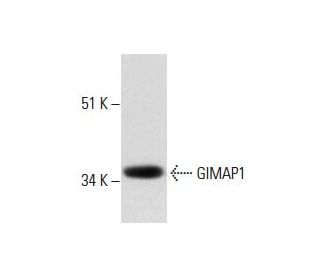


mouse spleen extract: sc-2391
- 500 µg protein in 200 µl SDS-PAGE Western blotting buffer
- Western blotting positive control
- recommended use is 50 µg (20 µl) per lane
- extracts should be stored at -20°C and repeated freezing and thawing should be minimized
- sample vial should be placed at 95° C for up to 5 minutes, once prior to use

QUICK LINKS
SEE ALSO...
Mouse spleen extract, derived from the spleen tissue of mice, has been widely employed in scientific research to investigate various biological mechanisms. This extract comprises a complex mixture of proteins, immune cells, cytokines, and other cellular components obtained from the spleen, a major organ involved in immune responses and hematopoiesis. The specific mechanisms of action associated with mouse spleen extract are diverse and complex. Researchers have utilized this extract to study immune cell activation, cytokine signaling pathways, and immune system modulation. By exposing immune cell cultures or experimental models to mouse spleen extract, scientists have gained valuable insights into the effects of its constituents on cellular processes, such as lymphocyte proliferation, cytokine production, and immune response regulation. Additionally, this extract has been employed to explore the role of specific proteins or molecules present in the spleen in various immunological contexts. The use of mouse spleen extract in research has contributed significantly to our understanding of immune system dynamics, immune cell interactions, and the underlying molecular mechanisms governing immune functions. It continues to be an invaluable tool for investigating fundamental aspects of immunology, elucidating immune responses, and unraveling the complexity of the immune system within the spleen.
mouse spleen extract References:
- Multiple caspases are involved in beta-amyloid-induced neuronal apoptosis. | Allen, JW., et al. 2001. J Neurosci Res. 65: 45-53. PMID: 11433428
- The restoration of hemolysin-forming capacity in x-irradiated rabbits by tissue and yeast preparations. | JAROSLOW, BN. and TALIAFERRO, WH. 1956. J Infect Dis. 98: 75-81. PMID: 13295628
- Studies of antibodies against organ-antigens. I. Effects of anti-mouse spleen serum upon the reticuloendothelial system. | BOROFF, DA., et al. 1957. J Immunol. 79: 34-8. PMID: 13475805
- Protection of guinea pigs against radiation death by cell-free mouse spleen extract. | ELLINGER, F. 1957. Science. 126: 1179-80. PMID: 13495446
- Failure of cell-free spleen extracts to protect irradiated animals. | MIYA, F., et al. 1959. Proc Soc Exp Biol Med. 101: 433-5. PMID: 13675269
- Quantitative studies concerning the radiation protective effect of cell-free mouse and guinea pig spleen extracts. | ELLINGER, F. and LINDSLEY, BF. 1961. Arch Int Pharmacodyn Ther. 132: 310-6. PMID: 13830857
- Polyclonal antibodies against RNase L. Subcellular localization of this enzyme in mouse cells. | Salehzada, T., et al. 1991. J Biol Chem. 266: 5808-13. PMID: 1706339
- Expression of mRNA and protein-protein interaction of the antiviral endoribonuclease RNase L in mouse spleen. | Gupta, A. and Rath, PC. 2014. Int J Biol Macromol. 69: 307-18. PMID: 24780566
- Characterization of two murine (2′-5′)(A)n-dependent endonucleases of different molecular mass. | Bisbal, C., et al. 1989. Eur J Biochem. 179: 595-602. PMID: 2920727
- Detection of antigens similar to placental antigens in mouse fertilized eggs by immunofluorescence. | Kometani, K., et al. 1973. Am J Obstet Gynecol. 116: 351-7. PMID: 4122480
- Leukemogenic effect of human leukemic materials. Attempts to enhance effect in mice by combination of materials with inactivated mouse leukemia virus. | Sinkovics, JG., et al. 1967. Cancer. 20: 846-50. PMID: 5228822
- In vitro studies on the fate of antigen. 4. The digestion of human serum albumin and ferritin by extracts of mouse spleen. | Rhodes, JM. 1971. Acta Pathol Microbiol Scand B Microbiol Immunol. 79: 153-62. PMID: 5282546
- Tissue-specific formation of transcription-initiation complexes at the 5′ end of the mouse beta major globin gene. | Triadou, P., et al. 1983. Eur J Biochem. 135: 163-9. PMID: 6884356
- Affinity purification and characterization of (2′-5′)oligo(adenylate)-dependent RNase from mouse spleen. | Bayard, B., et al. 1994. Eur J Biochem. 223: 403-10. PMID: 8055909
Ordering Information
| Product Name | Catalog # | UNIT | Price | Qty | FAVORITES | |
mouse spleen extract | sc-2391 | 500 µg/200 µl | $120.00 |