
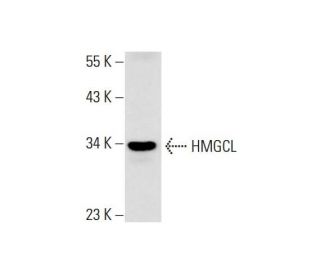


mouse liver extract: sc-2256
- 500 µg protein in 200 µl SDS-PAGE Western blotting buffer
- Western blotting positive control
- recommended use is 50 µg (20 µl) per lane
- extracts should be stored at -20°C and repeated freezing and thawing should be minimized
- sample vial should be placed at 95° C for up to 5 minutes, once prior to use

QUICK LINKS
SEE ALSO...
Mouse liver extract, derived from the liver tissue of mice, has been extensively employed in scientific research to investigate various biological mechanisms related to liver biology and metabolism. This extract contains a complex mixture of proteins, enzymes, lipids, and other cellular components obtained from the liver, the vital organ responsible for detoxification, metabolism, and synthesis of essential molecules. The specific mechanisms of action associated with mouse liver extract are diverse and complex. Researchers have utilized this extract to study liver cell function, metabolic pathways, and the regulation of hepatic processes. By exposing liver cell cultures or experimental models to mouse liver extract, scientists have gained valuable insights into the effects of its constituents on cellular processes, such as lipid metabolism, glucose homeostasis, and protein synthesis in the liver. Additionally, this extract has been used to explore the role of specific proteins or molecules present in the liver in various metabolic contexts. The use of mouse liver extract in research has contributed significantly to our understanding of liver physiology, metabolic disorders, and the complex interplay of cellular components within hepatic tissue. It continues to be a valuable tool for investigating fundamental aspects of liver biology, elucidating liver-specific mechanisms, and unraveling the complexities of hepatic function.
mouse liver extract References:
- Induction of hepatocyte proliferation and prevention of hepatocyte apoptosis by phenobarbital related to local humoral factor in mouse liver. | He, P., et al. 1998. Zhongguo Yao Li Xue Bao. 19: 557-60. PMID: 10437146
- Reversed-phase high-performance liquid chromatography procedure for the simultaneous determination of S-adenosyl-L-methionine and S-adenosyl-L-homocysteine in mouse liver and the effect of methionine on their concentrations. | Wang, W., et al. 2001. J Chromatogr B Biomed Sci Appl. 762: 59-65. PMID: 11589459
- Enzymatic studies of glucuronide formation in impaired liver. II. Activating effect of boiled liver extract on liver glucuronide formation. | TAKETA, K. 1962. Acta Med Okayama (1952). 16: 90-8. PMID: 13984679
- THE EFFECT OF NATURAL AND UNNNATURAL PYRIMIDINES AND PYRIMIDINE NUCLEOSIDES ON THE PHOSPHOROLYSIS OF 5-IODODEOXYURIDINE BY MOUSE LIVER EXTRACT. | KRISS, JP. and BOND, SB. 1964. Biochem Pharmacol. 13: 365-70. PMID: 14157596
- Human urinary trypsin inhibitor (urinastatin)-like substance in mouse liver. | Shikimi, T., et al. 1992. Life Sci. 50: 1399-406. PMID: 1573973
- Comprehensive proteome analysis of mouse liver by ampholyte-free liquid-phase isoelectric focusing. | Zhong, H., et al. 2008. Electrophoresis. 29: 2372-80. PMID: 18446803
- On-line two dimensional liquid chromatography/mass spectrometry for the analysis of triacylglycerides in peanut oil and mouse tissue. | Yang, Q., et al. 2012. J Chromatogr B Analyt Technol Biomed Life Sci. 895-896: 48-55. PMID: 22465197
- Analysis of free nucleotide pools of mouse liver tissue by high-pressure liquid chromatography (HPLC). | Abadi, RH. 2003. Indian J Biochem Biophys. 40: 209-12. PMID: 22900312
- A comparison of the chemical and liver extract-induced hepatic differentiation of adipose derived stem cells. | Nhung, TH., et al. 2015. In Vitro Cell Dev Biol Anim. 51: 1085-92. PMID: 26275888
- Inhibitory action of thymine ribonucleoside and other pyrimidine derivatives on the cleavage of 5-iodo-deoxy-uridine by mouse-liver extract. | Fox, BW., et al. 1970. Chem Biol Interact. 1: 331-40. PMID: 4258869
- Inhibition of TNF-triggering activity of lipopolysaccharide by a proteinaceous factor from normal mouse liver extract. | Satoh, M., et al. 1995. J Immunol. 155: 877-85. PMID: 7608565
- Enzymatic release of 5-formyluracil by mammalian liver extracts from DNA irradiated with ionizing radiation. | Zhang, QM., et al. 1995. Int J Radiat Biol. 68: 603-7. PMID: 8551102
- Biochemical characterization of mouse liver IBE1-amide immunoreactivity: limitations of antibody-based approaches for verification of peptide expression. | Quinn, KA., et al. 1996. Peptides. 17: 881-3. PMID: 8844781
Ordering Information
| Product Name | Catalog # | UNIT | Price | Qty | FAVORITES | |
mouse liver extract | sc-2256 | 500 µg/200 µl | $120.00 |