
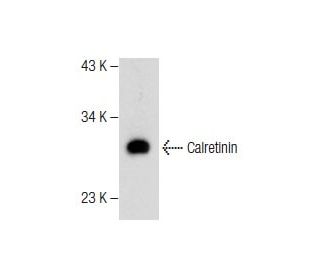


mouse cerebellum extract: sc-2403
- 500 µg protein in 200 µl SDS-PAGE Western blotting buffer
- Western blotting positive control
- recommended use is 50 µg (20 µl) per lane
- extracts should be stored at -20°C and repeated freezing and thawing should be minimized
- sample vial should be placed at 95° C for up to 5 minutes, once prior to use

QUICK LINKS
SEE ALSO...
Mouse cerebellum extract, derived from the cerebellar tissue of mice, has been extensively utilized in scientific research to investigate various biological mechanisms related to cerebellar physiology and brain function. This extract contains a complex mixture of proteins, enzymes, neurotransmitters, and other cellular components obtained from the cerebellum, a crucial region of the brain responsible for motor coordination, balance, and cognitive functions. The specific mechanisms of action associated with mouse cerebellum extract are diverse and complex. Researchers have employed this extract to study neuronal signaling, synaptic plasticity, and the regulation of cerebellar processes. By exposing neuronal cell cultures or experimental models to mouse cerebellum extract, scientists have gained valuable insights into the effects of its constituents on cellular processes, such as neurotransmitter release, dendritic spine formation, and calcium signaling in the cerebellum. Additionally, this extract has been used to explore the role of specific proteins or molecules present in the cerebellum in various neurological contexts. The use of mouse cerebellum extract in research has contributed significantly to our understanding of cerebellar physiology, brain development, and the complex interplay of cellular components within the cerebellar tissue. It continues to be an invaluable tool for investigating fundamental aspects of brain biology, elucidating cerebellum-specific mechanisms, and unraveling the complexities of cerebellar function.
mouse cerebellum extract References:
- Subunit composition and quantitative importance of GABA(A) receptor subtypes in the cerebellum of mouse and rat. | Pöltl, A., et al. 2003. J Neurochem. 87: 1444-55. PMID: 14713300
- Nectin-like molecule-1/TSLL1/SynCAM3: a neural tissue-specific immunoglobulin-like cell-cell adhesion molecule localizing at non-junctional contact sites of presynaptic nerve terminals, axons and glia cell processes. | Kakunaga, S., et al. 2005. J Cell Sci. 118: 1267-77. PMID: 15741237
- Translational control by neuroguidin, a eukaryotic initiation factor 4E and CPEB binding protein. | Jung, MY., et al. 2006. Mol Cell Biol. 26: 4277-87. PMID: 16705177
- Inositol 1,4,5-trisphosphate receptor type 1 phosphorylation and regulation by extracellular signal-regulated kinase. | Bai, GR., et al. 2006. Biochem Biophys Res Commun. 348: 1319-27. PMID: 16925983
- Development of GABAA Receptor Subtype-Selective Imidazobenzodiazepines as Novel Asthma Treatments. | Forkuo, GS., et al. 2016. Mol Pharm. 13: 2026-38. PMID: 27120014
- Alleviation of Multiple Asthmatic Pathologic Features with Orally Available and Subtype Selective GABAA Receptor Modulators. | Forkuo, GS., et al. 2017. Mol Pharm. 14: 2088-2098. PMID: 28440659
- Identification of transthyretin as a novel interacting partner for the δ subunit of GABAA receptors. | Zhou, L., et al. 2019. PLoS One. 14: e0210094. PMID: 30615651
- Rho GTPase-activating protein 10 (ARHGAP10/GRAF2) is a novel autoantibody target in patients with autoimmune encephalitis. | Jarius, S., et al. 2022. J Neurol. 269: 5420-5430. PMID: 35624318
Ordering Information
| Product Name | Catalog # | UNIT | Price | Qty | FAVORITES | |
mouse cerebellum extract | sc-2403 | 500 µg/200 µl | $120.00 |