


METTL11A Plasmide Double Nickase (h): sc-412015-NIC
- Specie Target: human
- 20 µg di DNA plasmidico purificato, pronto per trasfezione; sufficiente fino a 20 trasfezioni
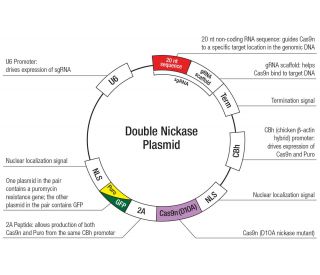
- METTL11A Plasmide Double Nickase (h) consiste in un paio di plasmidi ciascuno codificante una nucleasi Cas9 mutata D10A ed un RNA guida (gRNA) di 20 nt target specifico, disegnato per il silenziamento dell'espressione genica con una maggiore specificità rispetto alla controparte CRISPR/Cas9 KO
- Le sequenze di gRNA appaiate sono offset di circa 20 bp per permettere lo specifico doppio nicking Cas9 mediato che mima un DSB
- Un plasmide dei due contiene un gene per la resistenza alla puromicina per la selezione; l'altro plasmide nella coppia contiene un marker GFP per confermare la trasfezione visivamente.
- Il METTL11A Double Nickase Plasmid (h) e il METTL11A Double Nickase Plasmid (h2) codificano per distinti design di gRNA accoppiati che prendono di mira NTMT1. Uno o entrambi i design potrebbero essere disponibili

Informazioni ordini
| Nome del prodotto | Codice del prodotto | UNITÀ | Prezzo | Quantità | Preferiti | |
METTL11A Plasmide Double Nickase (h) | sc-412015-NIC | 20 µg | $410.00 | |||
METTL11A Plasmide Double Nickase (h2) | sc-412015-NIC-2 | 20 µg | $410.00 |
NTMT1 codifica per la metiltransferasi umana N-terminale METTL11A, un enzima SAM-dipendente che catalizza la metilazione α-N delle estremità N-terminali delle proteine dopo la rimozione della metionina iniziatrice. Questa metilazione N-terminale può influenzare le interazioni proteina–proteina, la stabilità e la localizzazione subcellulare, collegando METTL11A alla proteostasi e alla regolazione di processi di segnalazione e nucleari. L’attività di METTL11A si interseca con reti regolatorie più ampie dipendenti dalla metilazione, incluse vie associate alla cromatina e alla risposta allo stress, attraverso la modulazione di substrati metilati. Una metilazione N-terminale deregolata è stata associata ad alterazioni dei programmi di crescita e differenziamento cellulare, rendendo NTMT1 un locus utile per studi meccanicistici su fenotipi guidati dalla metilazione e sul riorientamento delle vie di segnalazione in modelli rilevanti per la malattia.
METTL11A Il plasmide Double Nickase (h) consiste in una coppia di plasmidi ingegnerizzati per l'editing ad alta specificità del locus NTMT1 nelle linee cellulari human. Ciascun plasmide esprime una nickasi Cas9 D10A e un sgRNA distinto che prende di mira filamenti di DNA opposti all'interno di NTMT1. Quando indirizzate verso siti adiacenti su filamenti di DNA opposti, le due nickasi generano tagli a filamento singolo sfalsati che insieme producono una rottura a doppio filamento sfalsata, richiedendo un'attività coordinata sul bersaglio da entrambe le guide. La rottura del DNA risultante viene risolta da vie di riparazione cellulare endogene, più comunemente attraverso la giunzione non omologa delle estremità (NHEJ), portando a inserzioni o delezioni che interrompono la funzione di NTMT1. Richiedendo il coinvolgimento di due sgRNA nel locus bersaglio, l'approccio a doppia nickasi migliora la specificità dell'editing e fornisce una strategia CRISPR complementare per applicazioni in cui è desiderato un controllo aggiuntivo sulla precisione del targeting.
Per supportare l'identificazione efficiente delle cellule modificate, un plasmide codifica la GFP per la visualizzazione fluorescente delle popolazioni trasfettate, mentre il plasmide di accompagnamento porta un gene di resistenza alla puromicina per la selezione antibiotica. Insieme, queste caratteristiche supportano l'arricchimento efficiente delle popolazioni co-trasfettate e semplificano la convalida dei cloni con NTMT1 interrotto.
Solo per uso di ricerca. Non destinato a uso diagnostico o terapeutico.