
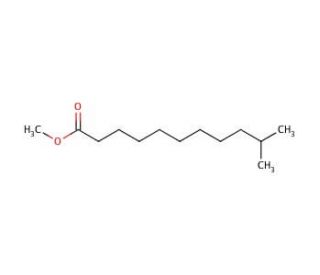

Methyl 10-methylundecanoate (CAS 5129-56-6)
QUICK LINKS
Methyl 10-methylundecanoate is a branched-chain fatty acid methyl ester that has been widely studied for its distinctive structural properties and its impact on lipid metabolism and membrane dynamics. This compound, characterized by a methyl group at the 10th carbon position, integrates into lipid bilayers, influencing their fluidity, phase behavior, and structural organization. Research has shown that the incorporation of methyl 10-methylundecanoate into cellular membranes can alter the function of membrane-associated proteins, including enzymes, receptors, and transporters. These changes can affect various cellular processes such as signal transduction, membrane transport, and metabolic regulation. In biochemical studies, methyl 10-methylundecanoate serves as a substrate to investigate the activity and specificity of enzymes involved in the biosynthesis and modification of branched-chain fatty acids, such as elongases and desaturases. Its unique branched structure provides valuable insights into the enzymatic mechanisms and regulatory pathways controlling the synthesis and modification of branched-chain fatty acids. Additionally, methyl 10-methylundecanoate is utilized as a reference standard in analytical chemistry, particularly in gas chromatography-mass spectrometry (GC-MS), for the identification and quantification of branched-chain fatty acids in complex biological samples. Overall, this compound is a crucial tool in lipidomics, enhancing our understanding of lipid metabolism, membrane structure, and the functional roles of branched-chain fatty acids in biological systems.
Methyl 10-methylundecanoate (CAS 5129-56-6) References
- Identification and total synthesis of novel fatty acids from the Siphonarid limpet Siphonaria denticulata. | Carballeira, NM., et al. 2001. J Nat Prod. 64: 1426-9. PMID: 11720525
- Isolation of the β-galactosphingolipid coniferoside using a tumor cell proteome reverse affinity protocol. | La Clair, JJ. and Rodríguez, AD. 2011. Bioorg Med Chem. 19: 6645-53. PMID: 21784648
- Structural diversity and possible functional roles of free fatty acids of the novel soil isolate Streptomyces sp. NP10. | Ilic-Tomic, T., et al. 2015. Appl Microbiol Biotechnol. 99: 4815-33. PMID: 25636833
- Chemistry and Sensory Characterization of a Bakery Product Prepared with Oils from African Edible Insects. | Cheseto, X., et al. 2020. Foods. 9: PMID: 32570724
- Parvodicin, a novel glycopeptide from a new species, Actinomadura parvosata: discovery, taxonomy, activity and structure elucidation. | Christensen, SB., et al. 1987. J Antibiot (Tokyo). 40: 970-90. PMID: 3624076
- Evaluation of the Antifungal Activity of Bacillusamyloliquefaciens and B. velezensis and Characterization of the Bioactive Secondary Metabolites Produced against Plant Pathogenic Fungi. | Soliman, SA., et al. 2022. Biology (Basel). 11: PMID: 36290294
- Metabolomics approach to identify key volatile aromas in Thai colored rice cultivars. | Tansawat, R., et al. 2023. Front Plant Sci. 14: 973217. PMID: 36925754
- Dihydroxy and monohydroxy fatty acids in Legionella pneumophila. | Mayberry, WR. 1981. J Bacteriol. 147: 373-81. PMID: 6790514
- ω-Oxidation of Branched-Chain Fatty Acids in Rat Liver Homogenates | and Ingemar Björkhem, Henry Danielsson. 1970. European Journal of Biochemistry. 14: 473-477.
Ordering Information
| Product Name | Catalog # | UNIT | Price | Qty | FAVORITES | |
Methyl 10-methylundecanoate, 25 mg | sc-215314 | 25 mg | $193.00 |