
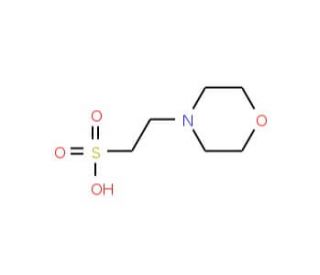

MES solution (CAS 4432-31-9)
QUICK LINKS
MES (2-(N-morpholino)ethanesulfonic acid) solution is a critical reagent utilized in various biochemical and molecular biology experiments. This compound is a zwitterionic buffer with a pKa near physiological pH, making it an ideal choice for maintaining a stable pH environment in biological assays. One of the primary uses of MES solution is in electrophoresis techniques, such as SDS-PAGE (sodium dodecyl sulfate-polyacrylamide gel electrophoresis). MES buffer provides a stable pH environment during protein separation, ensuring accurate migration of proteins through the gel matrix. Moreover, MES solution is commonly used in protein biochemistry experiments, including enzyme assays and protein purification processes. Its buffering capacity helps maintain the activity and stability of enzymes and proteins under physiological conditions, making it valuable in biochemical research. Additionally, MES solution finds applications in molecular biology protocols, such as nucleic acid electrophoresis and nucleic acid hybridization assays. Its low UV absorbance and minimal fluorescence make it suitable for use in nucleic acid visualization techniques. Furthermore, MES solution is utilized in cell culture media formulations to maintain a consistent pH during cell culture experiments. Its compatibility with mammalian cell lines and minimal impact on cell viability make it a preferred choice for maintaining physiological conditions in vitro.
MES solution (CAS 4432-31-9) References
- An evaluation of MES (2(N-Morpholino)ethanesulfonic acid) and Amberlite IRC-50 as pH buffers for nutrient solution studies. | Bugbee, BG. and Salisbury, FB. 1985. J Plant Nutr. 8: 567-83. PMID: 11539688
- Binding properties of a polyclonal antibody directed towards lead complexes. | Anfossi, L., et al. 2003. Ann Chim. 93: 499-512. PMID: 12911143
- Quantitation of folates and their catabolites in blood plasma, erythrocytes, and urine by stable isotope dilution assays. | Mönch, S., et al. 2010. Anal Biochem. 398: 150-60. PMID: 19903444
- A chemometric approach for optimizing protein covalent immobilization on magnetic core-shell nanoparticles in view of an alternative immunoassay. | Teste, B., et al. 2010. Talanta. 81: 1703-10. PMID: 20441961
- Chemical bath deposition of ZnO nanowires at near-neutral pH conditions without hexamethylenetetramine (HMTA): understanding the role of HMTA in ZnO nanowire growth. | McPeak, KM., et al. 2011. Langmuir. 27: 3672-7. PMID: 21361384
- Sensing metal ions with ion selectivity of a crown ether and fluorescence resonance energy transfer between carbon dots and graphene. | Wei, W., et al. 2012. Chem Commun (Camb). 48: 1284-6. PMID: 22179588
- MES Buffer Affects Arabidopsis Root Apex Zonation and Root Growth by Suppressing Superoxide Generation in Root Apex. | Kagenishi, T., et al. 2016. Front Plant Sci. 7: 79. PMID: 26925066
- In situ study of EDC/NHS immobilization on gold surface based on attenuated total reflection surface-enhanced infrared absorption spectroscopy (ATR-SEIRAS). | Tsai, TC., et al. 2019. Colloids Surf B Biointerfaces. 175: 300-305. PMID: 30553205
- Hydrogen ion buffers for biological research. | Good, NE., et al. 1966. Biochemistry. 5: 467-77. PMID: 5942950
- Ion exchange resins for the purification of monoclonal antibodies from animal cell culture. | Graf, H., et al. 1994. Bioseparation. 4: 7-20. PMID: 7764588
Ordering Information
| Product Name | Catalog # | UNIT | Price | Qty | FAVORITES | |
MES solution, 100 ml | sc-300959 | 100 ml | $113.00 |