
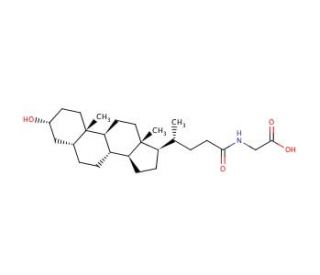

Lithocholylglycine (CAS 474-74-8)
See product citations (4)
QUICK LINKS
Eukaryotic initiation factors (eIFs) are a crucial group of proteins involved in the initiation phase of protein translation in eukaryotic cells. This process, known as translation initiation, marks the beginning of protein synthesis, and it plays a central role in regulating gene expression. eIFs orchestrate the assembly of ribosomes on messenger RNA (mRNA) and the recruitment of transfer RNA (tRNA) molecules bearing amino acids, enabling the synthesis of polypeptide chains. This intricate process is highly regulated and essential for proper cellular function. One of the key events in translation initiation is the formation of the eIF complex known as the eIF4F complex, which consists of eIF4E, eIF4A, and eIF4G. eIF4E binds to the mRNA cap structure, eIF4A serves as an RNA helicase, and eIF4G acts as a scaffold protein facilitating the interaction between various translation factors. This complex plays a pivotal role in mRNA recruitment to ribosomes, allowing efficient translation to occur. Additionally, eIF2 is another critical factor in translation initiation, responsible for delivering the initiator tRNA to the ribosome′s P-site. (eukaryotic translation initiation factor) eIF inhibitors are a class of chemical compounds that target key components of the eIF signaling pathway, disrupting their normal functions and consequently impeding the initiation of protein translation. These inhibitors may act at various stages of translation initiation, including the inhibition of eIF4F complex formation, disruption of eIF2 function, or interference with RNA helicase activity. By interfering with these critical steps, eIF inhibitors can modulate the rate of protein synthesis, potentially leading to global changes in gene expression.
Lithocholylglycine (CAS 474-74-8) References
- Metabolism of lithocholate in healthy man. II. Enterohepatic circulation. | Cowen, AE., et al. 1975. Gastroenterology. 69: 67-76. PMID: 1097294
- Thin-layer chromatographic separation of sulfated and nonsulfated lithocholic acids and their glycine and taurine conjugates. | Cass, OW., et al. 1975. J Lipid Res. 16: 159-60. PMID: 1127355
- Metabolism of lethocholate in healthy man. I. Biotransformation and biliary excretion of intravenously administered lithocholate, lithocholylglycine, and their sulfates. | Cowen, AE., et al. 1975. Gastroenterology. 69: 59-66. PMID: 1150035
- Metabolism of lithocholate in healthy man. III. Plasma disappearance of radioactivity after intravenous injection of labeled lithocholate and its derivatives. | Cowen, AE., et al. 1975. Gastroenterology. 69: 77-82. PMID: 1150037
- Lithocholylcholine, a bile acid/acetylcholine hybrid, is a muscarinic receptor antagonist. | Cheng, K., et al. 2002. J Pharmacol Exp Ther. 303: 29-35. PMID: 12235229
- Effect of side chain length on bile acid conjugation: glucuronidation, sulfation and coenzyme A formation of nor-bile acids and their natural C24 homologs by human and rat liver fractions. | Kirkpatrick, RB., et al. 1988. Hepatology. 8: 353-7. PMID: 3356416
- High pressure liquid chromatographic analysis of conjugated bile acids in human bile: simultaneous resolution of sulfated and unsulfated lithocholyl amidates and the common conjugated bile acids. | Rossi, SS., et al. 1987. J Lipid Res. 28: 589-95. PMID: 3598401
- Quercetin modulates the liver metabolic profile in a chronic unpredictable mild stress rat model based on metabolomics technology. | Jia, S., et al. 2023. Food Funct. 14: 1726-1739. PMID: 36722921
- Bile acid conjugation in the chimpanzee: effective sulfation of lithocholic acid. | Schwenk, M., et al. 1978. Arch Toxicol. 40: 109-18. PMID: 580732
- Preparation and antigenic property of 3-dehydrolithocholylglycine 3-(O-carboxymethyl) oxime-bovine serum albumin conjugate. | Yamauchi, S., et al. 1983. Steroids. 41: 165-72. PMID: 6197782
- Impaired lithocholate sulfation in the rhesus monkey: a possible mechanism for chenodeoxycholate toxicity. | Gadacz, TR., et al. 1976. Gastroenterology. 70: 1125-9. PMID: 817960
- Radioimmunoassay of unsulfated lithocholates. | Cowen, AE., et al. 1977. J Lipid Res. 18: 692-7. PMID: 925514
- Lithocholyltaurine interacts with cholinergic receptors on dispersed chief cells from guinea pig stomach. | Raufman, JP., et al. 1998. Am J Physiol. 274: G997-1004. PMID: 9696723
Ordering Information
| Product Name | Catalog # | UNIT | Price | Qty | FAVORITES | |
Lithocholylglycine, 2 mg | sc-207830A | 2 mg | $204.00 | |||
Lithocholylglycine, 5 mg | sc-207830B | 5 mg | $277.00 | |||
Lithocholylglycine, 10 mg | sc-207830 | 10 mg | $360.00 | |||
Lithocholylglycine, 25 mg | sc-207830C | 25 mg | $809.00 | |||
Lithocholylglycine, 50 mg | sc-207830D | 50 mg | $1515.00 | |||
Lithocholylglycine, 100 mg | sc-207830E | 100 mg | $2503.00 |