
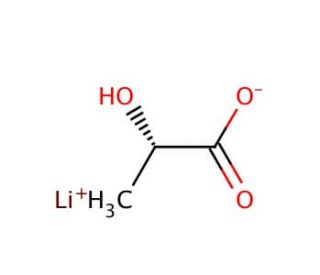

Lithium L-lactate (CAS 27848-80-2)
QUICK LINKS
Lithium L-lactate is a compound that functions as a source of lithium ions in experimental applications. Its mechanism of action involves the interaction of lithium ions with cellular processes, particularly in the central nervous system. At the molecular level, lithium ions are known to inhibit enzymes such as glycogen synthase kinase-3 (GSK-3) and inositol monophosphatase, which play roles in various signaling pathways and neurotransmitter release. This inhibition can impact cellular signaling and gene expression, influencing processes such as neuroplasticity and neurotransmission. In experimental applications, lithium L-lactate is used to study the effects of lithium ions on cellular and molecular processes, providing insights into the mechanisms underlying neurological and psychiatric conditions. Its role involves elucidating the specific molecular and cellular effects of lithium ions, contributing to a better understanding of their potential impact on neuronal function and behavior.
Lithium L-lactate (CAS 27848-80-2) References
- Lactate measurement interference by hemoglobin-based oxygen carriers (Oxyglobin, Hemopure, and Hemolink). | Jahr, JS., et al. 2005. Anesth Analg. 100: 431-436. PMID: 15673871
- Inhibition of the Anaerobic Growth of Brochothrix thermosphacta by Lactic Acid. | Grau, FH. 1980. Appl Environ Microbiol. 40: 433-6. PMID: 16345623
- Fabrication of lactate biosensor based on lactate dehydrogenase immobilized on cerium oxide nanoparticles. | Nesakumar, N., et al. 2013. J Colloid Interface Sci. 410: 158-64. PMID: 24034216
- Optimization of protein production by Micrococcus luteus for exploring pollutant-degrading uncultured bacteria. | Su, X., et al. 2014. Springerplus. 3: 117. PMID: 24616844
- Membrane-bound, pyridine nucleotide-independent L-lactate dehydrogenase of Rhodopseudomonas sphaeroides. | Markwell, JP. and Lascelles, J. 1978. J Bacteriol. 133: 593-600. PMID: 304854
- Glycollate inhibition of growth of Pseudomonas aeruginosa on lactate medium. | Brown, PR. and Tata, R. 1987. J Gen Microbiol. 133: 1521-6. PMID: 3117962
- Carbon isotope effects on the decarboxylation of carboxylic acids. Comparison of the lactate oxidase reaction and the degradation of pyruvate by H2O2. | Melzer, E. and Schmidt, HL. 1988. Biochem J. 252: 913-5. PMID: 3421932
- Characterization of a Novel Thermostable Dye-Linked l-Lactate Dehydrogenase Complex and Its Application in Electrochemical Detection. | Satomura, T., et al. 2021. Int J Mol Sci. 22: PMID: 34948373
- An O2-based enzyme electrode for whole blood lactate measurement under continuous flow conditions. | Weaver, MR. and Vadgama, PM. 1986. Clin Chim Acta. 155: 295-307. PMID: 3708858
- Protection of hypoxic guinea pig hearts with glucose and insulin. | Henry, PD., et al. 1974. Am J Physiol. 226: 309-13. PMID: 4811186
- Lactate-sodium cotransport in rat renal brush border membranes. | Barac-Nieto, M., et al. 1980. Am J Physiol. 239: F496-506. PMID: 6159793
- Role of pH, lactate, and anaerobiosis in controlling the growth of some fermentative Gram-negative bacteria on beef. | Grau, FH. 1981. Appl Environ Microbiol. 42: 1043-50. PMID: 7316511
- Essential role of arginine 235 in the substrate-binding of Lactobacillus plantarum D-lactate dehydrogenase. | Taguchi, H. and Ohta, T. 1994. J Biochem. 115: 930-6. PMID: 7961609
- Lactic acid is the factor in blood cell extracts which enhances the ability of CMP-NANA to sialylate gonococcal lipopolysaccharide and induce serum resistance. | Parsons, NJ., et al. 1996. Microb Pathog. 20: 87-100. PMID: 8722097
- Lactate enhancement of sialylation of gonococcal lipopolysaccharide and of induction of serum resistance by CMP-NANA is not due to direct activation of the sialyltransferase: metabolic events are involved. | Parsons, NJ., et al. 1996. Microb Pathog. 21: 193-204. PMID: 8878016
Ordering Information
| Product Name | Catalog # | UNIT | Price | Qty | FAVORITES | |
Lithium L-lactate, 5 g | sc-207829 | 5 g | $20.00 | |||
Lithium L-lactate, 10 g | sc-207829A | 10 g | $47.00 |