
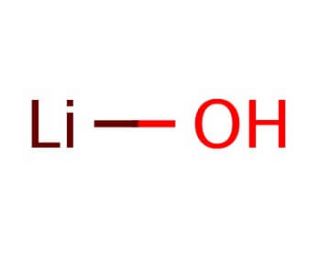

Lithium hydroxide (CAS 1310-65-2)
QUICK LINKS
Lithium hydroxide, an inorganic compound, has garnered substantial attention in scientific research, particularly in the realm of energy storage and conversion technologies. One significant mechanism of action lies in its application as an electrolyte in lithium-ion batteries (LIBs). As LIBs continue to dominate the portable electronics market and gain traction in electric vehicles and grid storage applications, the quest for high-performance electrolytes becomes paramount. Lithium hydroxide serves as a crucial component in the electrolyte formulation, facilitating the migration of lithium ions between the cathode and anode during charge and discharge cycles. Moreover, research efforts have focused on enhancing the stability, conductivity, and safety of lithium hydroxide-based electrolytes through the incorporation of additives, solvents, and nanostructured materials. Additionally, lithium hydroxide has been investigated for its potential application in the production of lithium-based ceramics and glasses, which hold promise for advanced materials with applications in solid-state batteries, fuel cells, and ion conductors. Furthermore, lithium hydroxide finds utility in various chemical synthesis routes, including the production of lithium-based compounds, pharmaceutical intermediates, and catalysts, contributing to advancements in organic and inorganic chemistry. Overall, the versatile mechanisms and research applications of lithium hydroxide underscore its significance in advancing energy storage technologies, materials science, and chemical synthesis, paving the way for innovations in sustainable energy and materials research.
Lithium hydroxide (CAS 1310-65-2) References
- Lithium hydroxide, LiOH, at elevated densities. | Hermann, A., et al. 2014. J Chem Phys. 141: 024505. PMID: 25028025
- Risk assessment of lithium-ion battery explosion: chemical leakages. | Park, YJ., et al. 2018. J Toxicol Environ Health B Crit Rev. 21: 370-381. PMID: 30977440
- Analysis of a Process for Producing Battery Grade Lithium Hydroxide by Membrane Electrodialysis. | Grageda, M., et al. 2020. Membranes (Basel). 10: PMID: 32854211
- Spectroscopic and Structural Characterization of Water-Shared Ion-Pairs in Aqueous Sodium and Lithium Hydroxide. | de Oliveira, DM., et al. 2021. J Phys Chem B. 125: 1439-1446. PMID: 33512171
- Recycling Lithium from Waste Lithium Bromide to Produce Lithium Hydroxide. | Gao, W., et al. 2021. Membranes (Basel). 11: PMID: 34677525
- Post combustion CO2 capture with calcium and lithium hydroxide. | Costagliola, MA., et al. 2022. Sci Rep. 12: 10518. PMID: 35732859
- Advances in Lithium-Oxygen Batteries Based on Lithium Hydroxide Formation and Decomposition. | Zhang, X., et al. 2022. Front Chem. 10: 923936. PMID: 35844634
- Conversion of Lithium Chloride into Lithium Hydroxide by Solvent Extraction. | Nguyen, VT., et al. 2023. J Sustain Metall. 9: 107-122. PMID: 36937828
- Lithium hydroxide as a high capacity adsorbent for CO2 capture: experimental, modeling and DFT simulation. | Ahmadi, M., et al. 2023. Sci Rep. 13: 7150. PMID: 37130879
- Hydrogen irradiation-driven computational surface chemistry of lithium oxide and hydroxide. | Krstic, PS., et al. 2023. J Chem Phys. 159: PMID: 38153149
Ordering Information
| Product Name | Catalog # | UNIT | Price | Qty | FAVORITES | |
Lithium hydroxide, 100 g | sc-211742 | 100 g | $90.00 |