
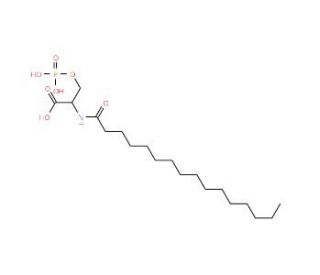

L-NASPA (CAS 155915-46-1)
QUICK LINKS
L-NASPA, or L-(−)-N-(3-Hydroxy-3-carboxy-1-oxopropyl)-aspartic acid, is an intriguing compound in biochemical research due to its role as a specific inhibitor of the enzyme glutaminase. Glutaminase is involved in the conversion of glutamine to glutamate, a key step in cellular nitrogen metabolism and an important process in the regulation of neurotransmitter levels. L-NASPA′s inhibition of glutaminase provides a useful tool for studying metabolic pathways in cancer cell metabolism, as many cancer cells rely on glutaminase activity for growth and survival. This compound allows researchers to dissect the role of glutaminase in the regulation of the tricarboxylic acid cycle and its influence on cellular bioenergetics. Additionally, L-NASPA is employed in neuroscience research to understand the modulation of glutamate levels in the brain, thereby elucidating the mechanisms underlying excitotoxicity and synaptic transmission. Its precise inhibitory action aids in studying the metabolic dependencies of various cell types and their responses to glutaminase inhibition. By utilizing L-NASPA, researchers can explore the complexities of glutamine metabolism, providing insights into both fundamental biochemical processes and the metabolic adaptations of cells under different physiological and pathological conditions.
L-NASPA (CAS 155915-46-1) References
- Lysophosphatidic acid-independent platelet activation by low-density lipoprotein. | Korporaal, SJ., et al. 2001. FEBS Lett. 494: 121-4. PMID: 11297747
- Stereochemical properties of lysophosphatidic acid receptor activation and metabolism. | Yokoyama, K., et al. 2002. Biochim Biophys Acta. 1582: 295-308. PMID: 12069841
- Effect of oxidation on the platelet-activating properties of low-density lipoprotein. | Korporaal, SJ., et al. 2005. Arterioscler Thromb Vasc Biol. 25: 867-72. PMID: 15692097
- Hydrolysis of phosphatidylserine-exposing red blood cells by secretory phospholipase A2 generates lysophosphatidic acid and results in vascular dysfunction. | Neidlinger, NA., et al. 2006. J Biol Chem. 281: 775-81. PMID: 16278219
- Scavenger receptor A and CD36 are implicated in mediating platelet activation induced by oxidized low- density lipoproteins. | Collot-Teixeira, S., et al. 2007. Arterioscler Thromb Vasc Biol. 27: 2491-2. PMID: 18029908
- Lysophosphatidic acid is a modulator of cyst growth in autosomal dominant polycystic kidney disease. | Blazer-Yost, BL., et al. 2011. Cell Physiol Biochem. 28: 1255-64. PMID: 22179013
- Characterization of a receptor subtype-selective lysophosphatidic acid mimetic. | Hooks, SB., et al. 1998. Mol Pharmacol. 53: 188-94. PMID: 9463475
- Novel Effect of N‐Palmitoyl‐L‐Serine Phosphoric Acid on Cytosolic Ca2+ Levels in Human Osteoblasts[J]. | Jan C R, Lu Y C, Jiann B P. 2003. Pharmacology & toxicology,. 93(2): 71-76.
Ordering Information
| Product Name | Catalog # | UNIT | Price | Qty | FAVORITES | |
L-NASPA, 1 mg | sc-215223 | 1 mg | $140.00 | |||
L-NASPA, 5 mg | sc-215223A | 5 mg | $410.00 |