
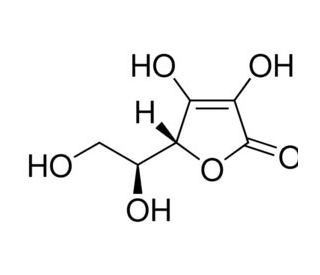

L-Ascorbic acid, cell culture (CAS 50-81-7)
Vedere citazioni di prodotto (1)
LINK RAPIDI
L'acido L-ascorbico, coltura cellulare, comunemente noto come vitamina C, è un micronutriente essenziale che svolge ruoli cruciali in vari processi biologici. È necessario assumerlo regolarmente per sostenere una salute ottimale, poiché l'organismo non lo immagazzina. L'acido L-ascorbico, in coltura cellulare, partecipa a numerose funzioni fisiologiche e biochimiche, tra cui la sintesi del collagene, il supporto del sistema immunitario e la difesa antiossidante. Inoltre, mostra effetti protettivi contro l'impatto dannoso delle radiazioni e dei radicali dell'ossigeno. Possiede proprietà quali la promozione della mineralizzazione negli osteoblasti, l'impegno nei processi di idrossilazione di prolina e lisina, la riduzione dello scambio Na+/Ca2+ negli astrociti in coltura e la modulazione dei livelli di nucleotidi ciclici nei linfociti B e T.
L-Ascorbic acid, cell culture (CAS 50-81-7) Referenze
- Acido L-ascorbico: uso clinico, tossicità, proprietà, metodi di determinazione e applicazione nell'analisi chimica. | Kleszczewska, E. 2000. Pharmazie. 55: 640-4. PMID: 11031765
- Acido L-ascorbico topico: studi di assorbimento percutaneo. | Pinnell, SR., et al. 2001. Dermatol Surg. 27: 137-42. PMID: 11207686
- Biosintesi dell'acido L-ascorbico nelle piante: nuove vie per un vecchio antiossidante. | Valpuesta, V. and Botella, MA. 2004. Trends Plant Sci. 9: 573-7. PMID: 15564123
- Relazione finale della valutazione della sicurezza di acido L-ascorbico, ascorbato di calcio, ascorbato di magnesio, ascorbilfosfato di magnesio, ascorbato di sodio e ascorbilfosfato di sodio utilizzati nei cosmetici. | Elmore, AR. 2005. Int J Toxicol. 24 Suppl 2: 51-111. PMID: 16154915
- L'integrazione di acido ascorbico (vitamina C) per ottimizzare la salute e la riproduzione dei bovini. | Ranjan, R., et al. 2012. Vet Q. 32: 145-50. PMID: 23078207
- Produzione industriale di acido L-ascorbico (vitamina C) e acido D-isoascorbico. | Pappenberger, G. and Hohmann, HP. 2014. Adv Biochem Eng Biotechnol. 143: 143-88. PMID: 24258144
- Sfide attuali per la produzione in un unico passaggio di acido l-ascorbico. | Wang, P., et al. 2018. Biotechnol Adv. 36: 1882-1899. PMID: 30031778
- Studi attuali sulla preparazione enzimatica dell'acido 2-O-α-d-glucopiranosil-l-ascorbico con la ciclodestrina glicosiltransferasi. | Tao, X., et al. 2019. Crit Rev Biotechnol. 39: 249-257. PMID: 30563366
- Effetto dell'acido L-ascorbico sull'alterazione della fisiopatologia cardiovascolare indotta dal nichel nei ratti Wistar. | Reddy, RC., et al. 2020. Biol Trace Elem Res. 195: 178-186. PMID: 31338802
- Consegna topica di spanlastici di acido l-ascorbico per il miglioramento della stabilità e il trattamento della pelle danneggiata dai raggi UVB. | Elhabak, M., et al. 2021. Drug Deliv. 28: 445-453. PMID: 33620008
- Attività antiallergica dell'acido 6-deossi-2-O-metil-6-(N-esadecanoil)amino-l-ascorbico. | Miura, K., et al. 2021. Molecules. 26: PMID: 34361837
- L'acido L-ascorbico e la curcumina prevengono il danno cerebrale indotto dall'acetato di piombo nei ratti: Possibili meccanismi. | Alhusaini, AM., et al. 2022. Dev Neurosci. 44: 59-66. PMID: 34942627
- Sintesi di coniugati acido l-ascorbico-amminoacido-norcantharidin e valutazione della loro attività biologica in vitro. | Zhou, Y., et al. 2022. Nat Prod Res. 36: 5455-5461. PMID: 34965811
Informazioni ordini
| Nome del prodotto | Codice del prodotto | UNITÀ | Prezzo | Quantità | Preferiti | |
L-Ascorbic acid, cell culture, 100 mg | sc-394304 | 100 mg | $83.00 |