
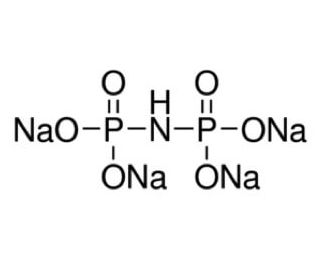

Imidodiphosphate sodium salt (CAS 26039-10-1)
QUICK LINKS
Imidodiphosphate sodium salt, often abbreviated as IDP, is a non-hydrolyzable analog of adenosine diphosphate (ADP) that is widely used in biochemistry and molecular biology research. Its resistance to enzymatic cleavage makes it an invaluable tool for studying the mechanisms of enzymes that normally act on phosphate ester bonds, such as kinases and ATPases. By substituting ATP or ADP with Imidodiphosphate sodium salt in enzymatic reactions, researchers can investigate the binding sites, conformational changes, and catalytic mechanisms of these enzymes without the complication of substrate turnover. This compound also plays a significant role in the study of signal transduction pathways where phosphorylation events are pivotal. The use of Imidodiphosphate sodium salt can help to delineate the specific protein-protein interactions that occur following the supposed ′phosphorylation′, as it mimics the structural conformation of phosphorylated intermediates. In addition, its application extends to the examination of motor proteins, such as myosins, where it can be used to stabilize the protein in a specific state for structural studies without the progression of the normal catalytic cycle.
Imidodiphosphate sodium salt (CAS 26039-10-1) References
- Ultrastructural localization of guanylate cyclase in bone cells. | Fukushima, O. and Gay, CV. 1991. J Histochem Cytochem. 39: 529-35. PMID: 1672318
- Phosphorus L(2,3)-edge XANES: overview of reference compounds. | Kruse, J., et al. 2009. J Synchrotron Radiat. 16: 247-59. PMID: 19240337
- Role of vacuolar membrane proton pumps in the acidification of protein storage vacuoles following germination. | Wilson, KA., et al. 2016. Plant Physiol Biochem. 104: 242-9. PMID: 27043965
Ordering Information
| Product Name | Catalog # | UNIT | Price | Qty | FAVORITES | |
Imidodiphosphate sodium salt, 1 g | sc-501001 | 1 g | $250.00 |