
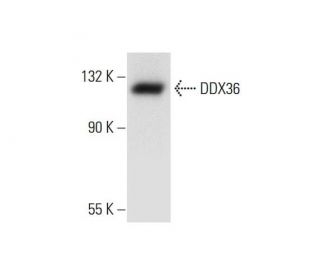


human testis extract: sc-363781
- 500 µg protein in 200 µl SDS-PAGE Western blotting buffer
- Western blotting positive control
- recommended use is 50 µg (20 µl) per lane
- extracts should be stored at -20°C and repeated freezing and thawing should be minimized
- sample vial should be placed at 95° C for up to 5 minutes, once prior to use
- Not available in Germany.

QUICK LINKS
SEE ALSO...
Human testis extract, sourced from human testicular tissue, serves as a valuable research tool in elucidating the complex mechanisms underlying male reproductive physiology and pathology. This extract contains a diverse array of bioactive molecules, including hormones (such as testosterone), enzymes, growth factors, and structural proteins specific to the testicular microenvironment. Mechanistically, human testis extract has been extensively employed to investigate spermatogenesis, steroidogenesis, and the regulation of male reproductive function. Researchers utilize this extract to study the development and maturation of spermatozoa, as well as the modulation of testosterone synthesis and secretion by the hypothalamic-pituitary-gonadal axis. Additionally, human testis extract serves as a crucial component in cell culture models aimed at mimicking the testicular environment and exploring the effects of endogenous testicular factors on germ cell development, Leydig cell function, and intercellular communication within the testis. Studies utilizing human testis extract contribute to our understanding of male reproductive biology, providing insights into the molecular mechanisms governing fertility, spermatogenic disorders, and male infertility. Overall, human testis extract plays a pivotal role in advancing research related to male reproductive health and fertility, offering valuable avenues for the development of diagnostic assays and strategies targeting male reproductive disorders.
human testis extract References:
- Specific expression of heat shock protein HspA2 in human male germ cells. | Son, WY., et al. 1999. Mol Hum Reprod. 5: 1122-6. PMID: 10587366
- Dynamic subcellular distribution of the DAZL protein is confined to primate male germ cells. | Ruggiu, M., et al. 2000. J Androl. 21: 470-7. PMID: 10819456
- Presence of antibodies to sperm YLP(12) synthetic peptide in sera and seminal plasma of immunoinfertile men. | Naz, RK. and Chauhan, SC. 2001. Mol Hum Reprod. 7: 21-6. PMID: 11134356
- Molecular cloning and sequencing of a novel cDNA encoding for a protein involved in human sperm function. | Naz, RK. and Zhu, X. 2001. Biochem Biophys Res Commun. 284: 911-7. PMID: 11409879
- Expression and function of the HSD-3.8 gene encoding a testis-specific protein. | Lin, W., et al. 2001. Mol Hum Reprod. 7: 811-8. PMID: 11517287
- Effect of antibodies to sperm-specific recombinant contraceptive vaccinogen (rCV) on murine fertilization: search for an animal model to examine its contraceptive potential. | Chauhan, SC. and Naz, RK. 2001. Mol Reprod Dev. 60: 425-32. PMID: 11599055
- Monoclonal antibody against human sperm-specific YLP12 peptide sequence involved in oocyte binding. | Naz, RK., et al. 2002. Arch Androl. 48: 169-75. PMID: 11964208
- Molecular cloning and sequencing of cDNA encoding for human FA-1 antigen. | Naz, RK. and Zhu, X. 2002. Mol Reprod Dev. 63: 256-68. PMID: 12203836
- Expression analysis of the human testis-specific serine/threonine kinase (TSSK) homologues. A TSSK member is present in the equatorial segment of human sperm. | Hao, Z., et al. 2004. Mol Hum Reprod. 10: 433-44. PMID: 15044604
- A sperm component, HSD-3.8 (SPAG1), interacts with G-protein beta 1 subunit and activates extracellular signal-regulated kinases (ERK). | Liu, N., et al. 2006. Front Biosci. 11: 1679-89. PMID: 16368546
- Properties of human testis-specific lactate dehydrogenase expressed from Escherichia coli. | LeVan, KM. and Goldberg, E. 1991. Biochem J. 273 (Pt 3): 587-92. PMID: 1996957
- Identification of the human testis protein phosphatase 1 interactome. | Fardilha, M., et al. 2011. Biochem Pharmacol. 82: 1403-15. PMID: 21382349
- Identification of a potential FSH modulatory protein in human testis and seminal plasma. | Sluss, PM., et al. 1989. J Androl. 10: 386-92. PMID: 2512274
Ordering Information
| Product Name | Catalog # | UNIT | Price | Qty | FAVORITES | |
human testis extract | sc-363781 | 500 µg/200 µl | $120.00 |