
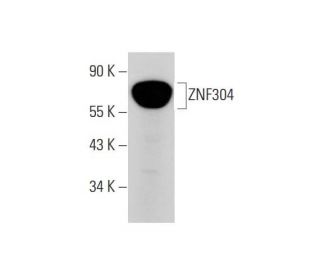


human ovary extract: sc-363769
- 500 µg protein in 200 µl SDS-PAGE Western blotting buffer
- Western blotting positive control
- recommended use is 50 µg (20 µl) per lane
- extracts should be stored at -20°C and repeated freezing and thawing should be minimized
- sample vial should be placed at 95° C for up to 5 minutes, once prior to use
- Not available in Germany.
QUICK LINKS
SEE ALSO...
Human ovary extract is derived from human ovarian tissue and contains a diverse array of proteins, hormones, growth factors, and other bioactive molecules involved in ovarian function and reproductive physiology. The ovaries are essential organs in the female reproductive system, responsible for the production of sex hormones, such as estrogen and progesterone, as well as oocytes for fertilization. Ovarian extracts have been extensively utilized in research to investigate various aspects of ovarian biology, including folliculogenesis, oocyte maturation, hormone synthesis and secretion, and ovarian pathologies. Researchers employ ovarian extracts to study the regulation of ovarian function, the interactions between ovarian cells and neighboring tissues, and the molecular mechanisms underlying ovarian development and dysfunction. Additionally, ovarian extracts serve as valuable tools in in vitro studies and cell culture experiments, allowing researchers to examine the effects of different compounds, environmental factors, or genetic manipulations on ovarian cells and tissues. Furthermore, ovarian extracts are used in assays to screen for potential agents targeting ovarian disorders and infertility. Overall, human ovary extract is a valuable resource in reproductive research, providing insights into ovarian physiology, pathophysiology, and potential interventions for ovarian-related conditions.
human ovary extract References:
- An immunoreactive peptide of the FSH involved in autoimmune infertility. | Gobert, B., et al. 2001. Biochem Biophys Res Commun. 289: 819-24. PMID: 11735119
- Autoimmunity and antigenic targets in ovarian pathology. | Forges, T., et al. 2004. Hum Reprod Update. 10: 163-75. PMID: 15073145
- IgG, IgA and IgM antibodies against FSH: serological markers of pathogenic autoimmunity or of normal immunoregulation? | Haller, K., et al. 2005. Am J Reprod Immunol. 54: 262-9. PMID: 16212648
- Oocytes and early embryos selectively express the survival factor BCL2L10. | Guillemin, Y., et al. 2009. J Mol Med (Berl). 87: 923-40. PMID: 19551325
- Human oviductal fluid (hOF) proteins. IV. Evidence for hOF proteins binding to human sperm. | Lippes, J. and Wagh, PV. 1989. Fertil Steril. 51: 89-94. PMID: 2642815
- Polycystic Ovary Syndrome May Be an Autoimmune Disorder. | Mobeen, H., et al. 2016. Scientifica (Cairo). 2016: 4071735. PMID: 27274883
- Conservation of mammalian secondary sperm receptor genes enables the promoter of the human gene to function in mouse oocytes. | Liang, LF. and Dean, J. 1993. Dev Biol. 156: 399-408. PMID: 8385033
Ordering Information
| Product Name | Catalog # | UNIT | Price | Qty | FAVORITES | |
human ovary extract | sc-363769 | 500 µg/200 µl | $118.00 |