
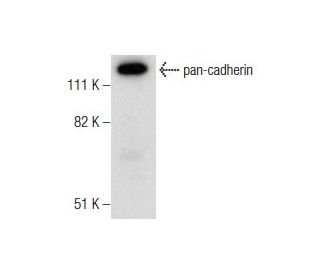


human colon extract: sc-363757
- 500 µg protein in 200 µl SDS-PAGE Western blotting buffer
- Western blotting positive control
- recommended use is 50 µg (20 µl) per lane
- extracts should be stored at -20°C and repeated freezing and thawing should be minimized
- sample vial should be placed at 95° C for up to 5 minutes, once prior to use
- Not available in Germany.

QUICK LINKS
SEE ALSO...
Human colon extract is a biological preparation derived from the colon tissue, a crucial segment of the large intestine that plays a central role in water absorption and waste processing. This extract encompasses a broad spectrum of cellular and molecular components, including epithelial cells, mucus, and various enzymes that facilitate digestion and protect against pathogens. The process of obtaining this extract involves the careful collection and homogenization of colon tissue, followed by a series of purification steps to isolate specific biochemical elements essential for research. In scientific studies, human colon extract is extensively used to explore gastrointestinal physiology and the complex microbial interactions within the gut environment. Researchers employ this extract to investigate the mechanisms of nutrient absorption, the production and regulation of gut hormones, and the immune functions that are localized in the colon. It also provides a valuable resource for studying the epithelial barrier and its role in maintaining gut health and preventing pathogen entry. By examining these interactions, scientists can gain deeper insights into the colonic ecosystem, including the balance of microbiota, and how disruptions in these systems can lead to disorders. Human colon extract thus serves as a fundamental tool in advancing our understanding of digestive health and the complex workings of the gastrointestinal tract.
human colon extract References:
- Experimental murine model for autoimmune enterocolitis using Klebsiella pneumoniae O3 lipopolysaccharide as a potent immunological adjuvant. | Paeng, N., et al. 1999. Microbiol Immunol. 43: 45-52. PMID: 10100746
- Specificity of the localization of transforming growth factor-alpha immunoreactivity in colon mucosa. | Xian, CJ., et al. 1999. J Histochem Cytochem. 47: 949-58. PMID: 10375383
- Characterization of a novel isoform of alpha-nascent polypeptide-associated complex as IgE-defined autoantigen. | Mossabeb, R., et al. 2002. J Invest Dermatol. 119: 820-9. PMID: 12406326
- The presence in experimental animals of a colon specific Mr 40,000 protein(s) with relevance to ulcerative colitis. | Biancone, L., et al. 1991. Gut. 32: 504-8. PMID: 1710197
- Mr 40,000 human colonic epithelial protein expression in colonic mucosa and presence of circulating anti-Mr 40,000 antibodies in cotton top tamarins with spontaneous colitis. | Das, KM., et al. 1992. Gut. 33: 48-54. PMID: 1740277
- Estrogen regulation of TRPM8 expression in breast cancer cells. | Chodon, D., et al. 2010. BMC Cancer. 10: 212. PMID: 20482834
- Netrin-1 rescues neuron loss by attenuating secondary apoptosis in ipsilateral thalamic nucleus following focal cerebral infarction in hypertensive rats. | Liao, SJ., et al. 2013. Neuroscience. 231: 225-32. PMID: 23232257
- Highly specific and sensitive measurements of human and monkey interleukin 21 using sequential protein and tryptic peptide immunoaffinity LC-MS/MS. | Palandra, J., et al. 2013. Anal Chem. 85: 5522-9. PMID: 23638938
- Colonic epithelium reactive monoclonal antibodies. Identification and immunohistochemical localization of the target epitopes. | Verstijnen, CP., et al. 1989. Histochemistry. 92: 397. PMID: 2479618
- Isolation and characterization of a colonic autoantigen specifically recognized by colon tissue-bound immunoglobulin G from idiopathic ulcerative colitis. | Takahashi, F. and Das, KM. 1985. J Clin Invest. 76: 311-8. PMID: 4019782
- Immunological studies in ulcerative colitis. 3. Incidence of antibodies to colon-antigen in ulcerative colitis and other gastro-intestinal diseases. | Lagercrantz, R., et al. 1966. Clin Exp Immunol. 1: 263-76. PMID: 5330184
- Molecular cloning, purification and in situ localization of human colon kallikrein. | Chen, LM., et al. 1995. Biochem J. 307 (Pt 2): 481-6. PMID: 7733886
- Circulating immunoglobulin G1 antibody in patients with ulcerative colitis against the colonic epithelial protein detected by a novel monoclonal antibody. | Dasgupta, A., et al. 1994. Gut. 35: 1712-7. PMID: 7829007
Ordering Information
| Product Name | Catalog # | UNIT | Price | Qty | FAVORITES | |
human colon extract | sc-363757 | 500 µg/200 µl | $120.00 |