
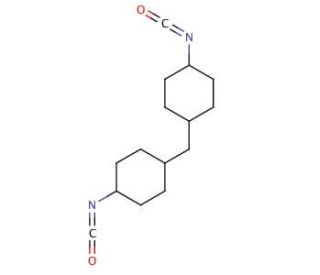

HMDI (CAS 5124-30-1)
QUICK LINKS
HMDI, also known as hexamethylene diisocyanate, functions as a crosslinking agent in polymer chemistry. Its mechanism of action involves reacting with hydroxyl groups to form urethane linkages, which contributes to the formation of polyurethane polymers. HMDI may play a role in the production of various polyurethane-based materials, such as foams, adhesives, coatings, and elastomers. HMDI′s mechanism of action involves its ability to undergo a reaction with polyols, resulting in the formation of a network of crosslinked polymers. This process contributes to the enhancement of mechanical properties and the overall performance of polyurethane materials. HMDI′s function as a crosslinking agent may be significant for the synthesis of polyurethane-based products, contributing to the advancement of materials science and related fields.
HMDI (CAS 5124-30-1) References
- A study on grafting and characterization of HMDI-modified calcium hydrogenphosphate. | Dong, GC., et al. 2001. Biomaterials. 22: 3179-89. PMID: 11603590
- Synthesis of HMDI-based segmented polyurethanes and their use in the manufacture of elastomeric composites for cardiovascular applications. | Solís-Correa, RE., et al. 2007. J Biomater Sci Polym Ed. 18: 561-78. PMID: 17550659
- Preparation and surface characterization of HMDI-activated 316L stainless steel for coronary artery stents. | Chuang, TW., et al. 2008. J Biomed Mater Res A. 85: 722-30. PMID: 17896759
- Removal of parabens from aqueous solution using β-cyclodextrin cross-linked polymer. | Chin, YP., et al. 2010. Int J Mol Sci. 11: 3459-71. PMID: 20957106
- Study of the properties of the new biodegradable polyurethane PU (TEG-HMDI) as matrix forming excipient for controlled drug delivery. | Campiñez, MD., et al. 2013. Drug Dev Ind Pharm. 39: 1758-64. PMID: 24087856
- The effect of a polyurethane coating incorporating both a thrombin inhibitor and nitric oxide on hemocompatibility in extracorporeal circulation. | Major, TC., et al. 2014. Biomaterials. 35: 7271-85. PMID: 24927680
- A Review of the Surface Modification of Cellulose and Nanocellulose Using Aliphatic and Aromatic Mono- and Di-Isocyanates. | Abushammala, H. and Mao, J. 2019. Molecules. 24: PMID: 31370227
- Study of the Compatibilization Effect of Different Reactive Agents in PHB/Natural Fiber-Based Composites. | Sánchez-Safont, EL., et al. 2020. Polymers (Basel). 12: PMID: 32872605
- Green synthesis and biological activities assessment of some new chromeno[2,3-b]pyridine derivatives. | Azarifar, D., et al. 2022. Mol Divers. 26: 891-902. PMID: 33861411
- Biocompatibility and Hemolytic Activity Studies of Synthesized Alginate-Based Polyurethanes. | Zafar, K., et al. 2022. Polymers (Basel). 14: PMID: 35631972
- Synthesis and Characterization of New Polycarbonate-Based Poly(thiourethane-urethane)s. | Puszka, A. and Sikora, JW. 2022. Polymers (Basel). 14: PMID: 35890709
- Chemorheological Monitoring of Cross-Linking in Slide-ring Gels Derived From α-cyclodextrin Polyrotaxanes. | Dikshit, K. and Bruns, CJ. 2022. Front Chem. 10: 923775. PMID: 35928212
- Polysiloxane-Based Polyurethanes with High Strength and Recyclability. | Wang, W., et al. 2022. Int J Mol Sci. 23: PMID: 36293466
Ordering Information
| Product Name | Catalog # | UNIT | Price | Qty | FAVORITES | |
HMDI, 100 ml | sc-250118 | 100 ml | $50.00 | |||
HMDI, 500 ml | sc-250118A | 500 ml | $111.00 |