
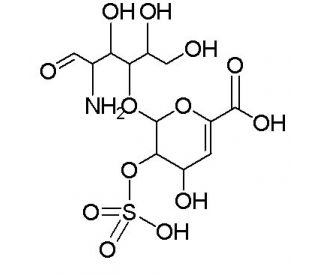

Heparin disaccharide III-H sodium salt (CAS 136098-01-6)
QUICK LINKS
Heparin disaccharide III-H sodium salt, an essential component in glycobiology research, has garnered significant attention due to its structural complexity and biological activities. This chemical entity, derived from heparin, a sulfated glycosaminoglycan, serves as a valuable tool for investigating carbohydrate-protein interactions and deciphering molecular mechanisms underlying various physiological processes. Research studies have explaind the role of heparin disaccharide III-H in modulating key cellular signaling pathways involved in inflammation, angiogenesis, and tissue regeneration. Specifically, its interactions with growth factors, cytokines, and cell surface receptors have been explored to understand their implications in cellular communication and tissue homeostasis. Moreover, heparin disaccharide III-H has been utilized as a molecular probe to study glycosaminoglycan-mediated cell adhesion, extracellular matrix remodeling, and proteoglycan biosynthesis. Furthermore, researchers have investigated the potential of heparin disaccharide III-H in biomaterial science, where its incorporation into scaffolds and hydrogels has shown promise for tissue engineering applications. By harnessing the unique structural features and biological properties of heparin disaccharide III-H, scientists aim to develop novel strategies for managing various diseases and injuries. Ongoing research efforts continue to unravel the complex roles of heparin disaccharide III-H in biological systems, paving the way for advancements in both basic and translational research endeavors.
Ordering Information
| Product Name | Catalog # | UNIT | Price | Qty | FAVORITES | |
Heparin disaccharide III-H sodium salt, 1 mg | sc-215135 | 1 mg | $159.00 |