
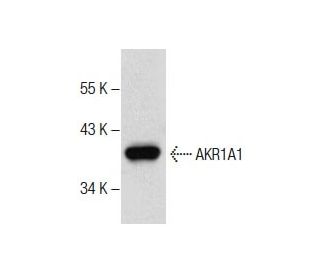


Hep G2 Cell Lysate: sc-2227
- 500 µg protein in 200 µl SDS-PAGE Western blotting buffer
- human whole cell lysate; hepatoblastoma cells
- whole cell lysate provided as Western blotting positive control
- should be stored at -20°C and repeated freezing and thawing should be minimized
- sample vial should be placed at 95° C for up to 5 minutes, once prior to use

QUICK LINKS
SEE ALSO...
The Hep G2 Cell Lysate is derived from the Hep G2 cell line, a human liver carcinoma cell line originally obtained from a 15-year-old Caucasian male with hepatoblastoma. This lysate is widely used in scientific research to study liver cancer biology and related cellular processes. Hep G2 cells are known for their ability to produce liver-specific proteins and enzymes, making them a valuable model for investigating hepatocyte function and liver-related diseases. Research applications of the Hep G2 Cell Lysate include studies on gene expression, protein interactions, and signal transduction pathways. This lysate is commonly used in proteomics and mass spectrometry to identify and quantify proteins involved in liver cancer progression and metabolism. Additionally, it serves as a model system for evaluating the effects of various chemical compounds on liver cells, aiding in the discovery of molecular targets and pathways involved in carcinogenesis. The Hep G2 Cell Lysate is also employed in Western blotting and immunoprecipitation assays to investigate the activity and regulation of specific signaling molecules. Overall, this lysate provides a robust and reproducible tool for exploring the molecular mechanisms underlying liver cancer and for advancing our understanding of liver biology in a research context.
Hep G2 Cell Lysate References:
- Evidence of covalent binding of the dietary flavonoid quercetin to DNA and protein in human intestinal and hepatic cells. | Walle, T., et al. 2003. Biochem Pharmacol. 65: 1603-10. PMID: 12754096
- Metabolism of 4-(methylnitrosamino)-1-(3-pyridyl)-1-butanone in human lung and liver microsomes and cytochromes P-450 expressed in hepatoma cells. | Smith, TJ., et al. 1992. Cancer Res. 52: 1757-63. PMID: 1312898
- FR901512, a novel HMG-CoA reductase inhibitor produced by an agonomycetous fungus no. 14919. II. Biological profiles. | Hatori, H., et al. 2004. J Antibiot (Tokyo). 57: 390-3. PMID: 15323128
- Synthesis of rhodanese in Hep 3B cells. | Pallini, R., et al. 1990. Mol Cell Biochem. 93: 61-7. PMID: 1691817
- Extracellular processing of proapolipoprotein A-II in Hep G2 cell cultures is mediated by a 54-kDa protease immunologically related to cathepsin B. | Gordon, JI., et al. 1985. J Biol Chem. 260: 14824-31. PMID: 2414299
- cDNA-directed expression of human thyroid peroxidase. | Kimura, S., et al. 1989. FEBS Lett. 250: 377-80. PMID: 2753139
- Inorganic nanoparticles as potential regulators of immune response in dendritic cells. | Fogli, S., et al. 2017. Nanomedicine (Lond). 12: 1647-1660. PMID: 28635380
- Biosynthesis of factor XIII B subunit by human hepatoma cell lines. | Nagy, JA., et al. 1986. Blood. 68: 1272-9. PMID: 3022846
- Biosynthesis of complement C1 inhibitor by Hep G2 cells. Reactivity of different glycosylated forms of the inhibitor with C1s. | Prandini, MH., et al. 1986. Biochem J. 237: 93-8. PMID: 3099750
- Chemoproteomics-Enabled De Novo Discovery of Photoswitchable Carboxylesterase Inhibitors for Optically Controlled Drug Metabolism. | Dwyer, BG., et al. 2021. Angew Chem Int Ed Engl. 60: 3071-3079. PMID: 33035395
- Identification of receptor ligands and receptor subtypes using antagonists in a capillary electrophoresis single-cell biosensor separation system. | Fishman, HA., et al. 1995. Proc Natl Acad Sci U S A. 92: 7877-81. PMID: 7644507
- A quantitative method for cDNA-directed expression in cultured mammalian cells. | Aoyama, T., et al. 1995. Anal Biochem. 227: 85-9. PMID: 7668396
- The tissue-specific RNA-binding protein COLBP is differentially regulated during myogenesis. | Preiss, T., et al. 1994. Biochim Biophys Acta. 1221: 286-9. PMID: 8167150
- The role of betagamma and alphagamma complexes in the assembly of human fibrinogen. | Huang, S., et al. 1996. J Biol Chem. 271: 27942-7. PMID: 8910396
- Production and flow cytometric application of a monoclonal anti-glucocorticoid receptor antibody. | Berki, T., et al. 1998. J Immunol Methods. 214: 19-27. PMID: 9692855
Ordering Information
| Product Name | Catalog # | UNIT | Price | Qty | FAVORITES | |
Hep G2 Cell Lysate | sc-2227 | 500 µg/200 µl | $120.00 |