
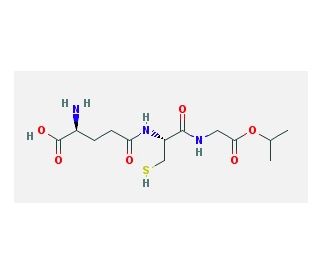

Glutathione-monoisopropyl ester (reduced) (CAS 97451-46-2)
QUICK LINKS
Glutathione-monoisopropyl ester (reduced) is a derivative of glutathione, a tripeptide molecule composed of glutamate, cysteine, and glycine. This chemical has garnered significant attention in scientific research due to its potential roles in cellular redox regulation and antioxidant defense mechanisms. Glutathione-monoisopropyl ester serves as a cell-permeable form of glutathione, enabling its efficient delivery into cells for various experimental purposes. One of its mechanisms of action involves serving as a precursor to intracellular glutathione, where it can be enzymatically converted back to its active form by cellular esterases. This property has been exploited in research to investigate the role of glutathione in cellular processes such as oxidative stress, detoxification, and regulation of cellular signaling pathways. Additionally, glutathione-monoisopropyl ester has been utilized in studies exploring the impact of glutathione depletion or supplementation on cellular functions and disease states. Furthermore, this compound has been employed in biochemical assays to assess glutathione levels and redox status in cells and tissues, providing valuable insights into the mechanisms underlying oxidative stress-related diseases and potential interventions. Overall, glutathione-monoisopropyl ester holds promise as a versatile tool in scientific research, facilitating the investigation of glutathione-related mechanisms and their implications in various biological processes.
Glutathione-monoisopropyl ester (reduced) (CAS 97451-46-2) References
- Can drugs or micronutrients prevent cataract? | Harding, JJ. 2001. Drugs Aging. 18: 473-86. PMID: 11482741
- Oxidants, antioxidants and the ischemic brain. | Warner, DS., et al. 2004. J Exp Biol. 207: 3221-31. PMID: 15299043
- Depletion of glutathione by L-buthionine sulfoximine does not promote inactivation of myo-inositol transport in cultured bovine lens epithelial cells. | Cammarata, PR., et al. 1991. Curr Eye Res. 10: 321-30. PMID: 1676962
- Glutathione status, glutathione monoisopropyl ester, and cadmium metabolism in mice. | Gale, GR., et al. 1990. Res Commun Chem Pathol Pharmacol. 70: 71-91. PMID: 2263763
- Interactions of cisplatin with non-DNA targets and their influence on anticancer activity and drug toxicity: the complex world of the platinum complex. | Mezencev, R. 2015. Curr Cancer Drug Targets. 14: 794-816. PMID: 25431081
- Soyasaponin Ag inhibits α‑MSH‑induced melanogenesis in B16F10 melanoma cells via the downregulation of TRP‑2. | Yang, SH., et al. 2017. Int J Mol Med. 40: 631-636. PMID: 28713957
- Mitochondrial damage in muscle occurs after marked depletion of glutathione and is prevented by giving glutathione monoester. | Mårtensson, J. and Meister, A. 1989. Proc Natl Acad Sci U S A. 86: 471-5. PMID: 2911592
- Molecular mechanisms of Cisplatin- induced placental toxicity and teratogenicity in rats and the ameliorating role of N-acetyl-cysteine. | Hassan, MS., et al. 2019. Int J Biochem Cell Biol. 115: 105579. PMID: 31401317
Ordering Information
| Product Name | Catalog # | UNIT | Price | Qty | FAVORITES | |
Glutathione-monoisopropyl ester (reduced), 250 mg | sc-295013 | 250 mg | $390.00 | |||
Glutathione-monoisopropyl ester (reduced), 1 g | sc-295013A | 1 g | $1170.00 |