
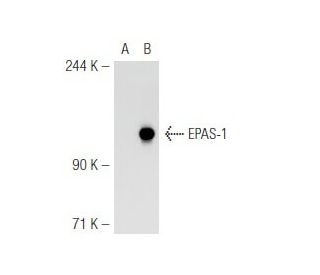


EPAS-1/HIF-2 alpha (m): 293T Lysate: sc-120061
- mouse EPAS-1/HIF-2 alpha transfected 293T lysate
- 100 µg protein in 200 µl SDS-PAGE buffer; suitable as Western Blotting control for EPAS-1/HIF-2 alpha antibodies
- Suitable control antibody: EPAS-1/HIF-2 alpha Antibody (190b): sc-13596 is recommended as control antibody for monitoring of EPAS-1/HIF-2 alpha expression knockdown by Western blotting or immunofluorescence
- should be stored at -20° C and repeated freezing and thawing should be minimized
- sample vial should be boiled once prior to use
- non-transfected control 293T lysate (sc-117752)

QUICK LINKS
The EPAS-1 (m): 293T Lysate is derived from the HEK293T cell line, a human embryonic kidney cell line widely utilized for its high transfection efficiency, facilitating extensive research applications. This lysate contains Endothelial PAS Domain Protein 1 (EPAS-1), also known as Hypoxia-Inducible Factor 2 Alpha (HIF-2α), a transcription factor critical for cellular response to hypoxia. EPAS-1 functions by dimerizing with HIF-1β and binding to hypoxia-responsive elements in the promoter regions of target genes, regulating their expression in response to low oxygen levels. This regulatory mechanism is essential for cellular adaptation to hypoxic conditions, influencing processes such as angiogenesis, erythropoiesis, and metabolic reprogramming. In research, the EPAS-1 (m): 293T Lysate is utilized to study the molecular mechanisms of hypoxia signaling and the regulatory networks governed by EPAS-1. Researchers employ this lysate in in vitro assays to analyze the interaction between EPAS-1 and other transcriptional co-activators, investigate post-translational modifications such as hydroxylation and acetylation, and explore the transcriptional activation of hypoxia-responsive genes. The lysate also serves as a valuable tool in screening assays to identify potential modulators of EPAS-1 activity, facilitating a deeper understanding of cellular hypoxia responses. Through these applications, scientists can gain insights into the role of EPAS-1 in cellular adaptation to hypoxic stress and its broader implications in physiological and developmental processes.
Ordering Information
| Product Name | Catalog # | UNIT | Price | Qty | FAVORITES | |
EPAS-1/HIF-2 alpha (m): 293T Lysate | sc-120061 | 100 µg/200 µl | $236.00 |