
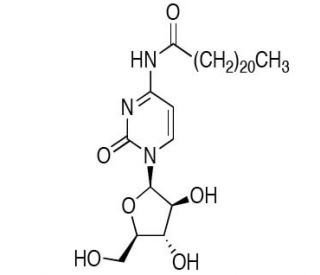

Enocitabine (CAS 55726-47-1)
QUICK LINKS
Enocitabine, chemically known as 1-[(2R,3S,4R,5R)-3,4-dihydroxy-5-(hydroxymethyl)oxolan-2-yl]-5-methylpyrimidine-2,4-dione, is a nucleoside analog that has been studied extensively in the field of molecular biology and biochemistry. Its structure closely resembles that of cytidine but with specific modifications that confer unique properties for scientific research. In biochemistry research, enocitabine is utilized primarily to study the synthesis and function of RNA. It is incorporated into RNA strands in place of the natural nucleoside cytidine during transcription. This incorporation can affect RNA synthesis and function, allowing scientists to investigate various aspects of RNA metabolism and regulation. For example, by observing how enocitabine-modified RNA behaves in the cell, researchers can glean insights into the dynamics of RNA transcription, splicing, and decay. Further, enocitabine′s interactions with RNA polymerases and other nucleic acid-synthesizing enzymes have been a subject of study. These interactions can alter the normal processing of nucleic acids, providing a tool for dissecting the mechanisms by which these enzymes recognize and process RNA substrates. On a molecular level, enocitabine has been employed to examine the effects of nucleoside modifications on the stability and structure of nucleic acids. By replacing natural nucleosides with enocitabine in synthetic oligonucleotides, researchers can study how changes in nucleoside structure influence the physical properties of RNA, such as melting temperature, secondary structure formation, and interaction with proteins.
Enocitabine (CAS 55726-47-1) References
- Modulation of cytotoxic effect of anticancer drugs by dipyridamole in HeLa cells in vitro. | Kusumoto, H., et al. 1990. Anticancer Res. 10: 1643-5. PMID: 2285237
Ordering Information
| Product Name | Catalog # | UNIT | Price | Qty | FAVORITES | |
Enocitabine, 25 mg | sc-205310 | 25 mg | $315.00 | |||
Enocitabine, 100 mg | sc-205310A | 100 mg | $992.00 |