
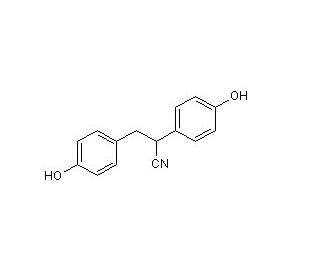

DPN (CAS 1428-67-7)
See product citations (4)
QUICK LINKS
DPN, known as 2,3-Bis(4-hydroxyphenyl)propionitrile, is a chemical compound extensively utilized in research focused on studying estrogen receptor signaling pathways. As a selective agonist for the estrogen receptor beta (ERβ), DPN is employed in biochemical assays to probe the distinct functions and mechanisms of this receptor subtype in various cellular models. Its binding affinity and selectivity for ERβ over ERα allow researchers to dissect the nuanced roles of estrogen receptors in cell differentiation, proliferation, and gene expression. In molecular biology, DPN serves as a tool to understand the differential activation of downstream targets of ERβ, contributing to the broader understanding of hormone-mediated signaling. Moreover, DPN′s role in research extends to the exploration of its effects on receptor dimerization, helping to clarify the complexities of intracellular receptor dynamics and their impact on cellular outcomes.
DPN (CAS 1428-67-7) References
- Estrogen receptor-beta potency-selective ligands: structure-activity relationship studies of diarylpropionitriles and their acetylene and polar analogues. | Meyers, MJ., et al. 2001. J Med Chem. 44: 4230-51. PMID: 11708925
- Acute effects of oestrogen receptor subtype-specific agonists on vascular contractility. | Montgomery, S., et al. 2003. Br J Pharmacol. 139: 1249-53. PMID: 12890703
- Activities of estrogen receptor alpha- and beta-selective ligands at diverse estrogen responsive gene sites mediating transactivation or transrepression. | Harrington, WR., et al. 2003. Mol Cell Endocrinol. 206: 13-22. PMID: 12943986
- Estradiol or diarylpropionitrile decrease anxiety-like behavior of wildtype, but not estrogen receptor beta knockout, mice. | Walf, AA., et al. 2008. Behav Neurosci. 122: 974-81. PMID: 18823154
- Systemic administration of diarylpropionitrile (DPN) or phytoestrogens does not affect anxiety-related behaviors in gonadally intact male rats. | Patisaul, HB., et al. 2009. Horm Behav. 55: 319-28. PMID: 19071129
- The inhibitory effect of diarylpropionitrile, a selective agonist of estrogen receptor beta, on the growth of MC38 colon cancer line. | Motylewska, E., et al. 2009. Cancer Lett. 276: 68-73. PMID: 19101081
- The estrogen receptor beta agonist diarylpropionitrile (DPN) inhibits medulloblastoma development via anti-proliferative and pro-apototic pathways. | Mancuso, M., et al. 2011. Cancer Lett. 308: 197-202. PMID: 21636213
- Neuroprotective effects of diarylpropionitrile against β-amyloid peptide-induced neurotoxicity in rat cultured cortical neurons. | Suwanna, N., et al. 2014. Neurosci Lett. 578: 44-9. PMID: 24960633
- Neuroprotection by diarylpropionitrile in mice with spinal cord injury. | Suwanna, N., et al. 2014. EXCLI J. 13: 1097-103. PMID: 26417324
- Effects of long-term dietary administration of estrogen receptor-beta agonist diarylpropionitrile on ovariectomized female ICR (CD-1) mice. | Said, SA., et al. 2018. Geroscience. 40: 393-403. PMID: 30099673
- Physiological dosages of estradiol and diarylpropionitrile decrease depressive behavior and increase tryptophan hydroxylase expression in the dorsal raphe nucleus of rats subjected to the forced swim test. | Yang, F., et al. 2019. Neuroreport. 30: 66-70. PMID: 30379725
- Protective effects of diarylpropionitrile against hydrogen peroxide-induced damage in human neuroblastoma SH-SY5Y cells. | Suthprasertporn, N., et al. 2022. Drug Chem Toxicol. 45: 44-51. PMID: 31495239
- Diarylpropionitrile inhibits melanogenesis via protein kinase A/cAMP-response element-binding protein/microphthalmia-associated transcription factor signaling pathway in α-MSH-stimulated B16F10 melanoma cells. | Lee, HJ., et al. 2022. Korean J Physiol Pharmacol. 26: 113-123. PMID: 35203061
Ordering Information
| Product Name | Catalog # | UNIT | Price | Qty | FAVORITES | |
DPN, 10 mg | sc-203431 | 10 mg | $102.00 | |||
DPN, 50 mg | sc-203431A | 50 mg | $431.00 |