
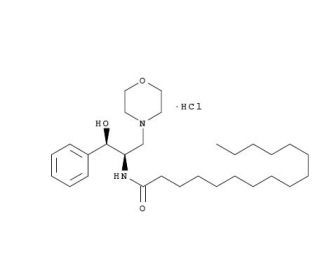

DL-PPMP (CAS 149022-18-4)
See product citations (4)
QUICK LINKS
DL-PPMP is a compound employed in various research applications due to its role as an inhibitor of glucosylceramide synthase, the key enzyme involved in glycosphingolipid biosynthesis. In studies focusing on cellular mechanisms, DL-PPMP is useful for examining the impact of altered glycosphingolipid levels on cell membrane properties and intracellular signaling pathways. It is instrumental in investigating the molecular basis of lipid storage conditions, where the accumulation or depletion of glycosphingolipids is a characteristic feature. Furthermore, DL-PPMP is used in research aimed at exploring the regulation of autophagy and apoptosis, as the perturbation of glycosphingolipid metabolism can influence these vital cellular processes. The compound has also gained attention in studies related to oncology, where it aids in investigating the implications of glycosphingolipids on the proliferation and survival of cancer cells.
DL-PPMP (CAS 149022-18-4) References
- [Investigation on the relationship between MDR and expression of N-glycosphingolipids in vincristine resistant KBv200 cell line]. | Zhang, J., et al. 2001. Zhonghua Zhong Liu Za Zhi. 23: 111-4. PMID: 11783012
- [Expression of glucosylceramide synthase mRNA in vincristine-resistant KBV200 cell line in association with multidrug resistance]. | Yang, Q., et al. 2004. Di Yi Jun Yi Da Xue Xue Bao. 24: 779-81. PMID: 15257901
- Improved inhibitors of glucosylceramide synthase. | Abe, A., et al. 1992. J Biochem. 111: 191-6. PMID: 1533217
- Loss of lysophospholipase 3 increases atherosclerosis in apolipoprotein E-deficient mice. | Taniyama, Y., et al. 2005. Biochem Biophys Res Commun. 330: 104-10. PMID: 15781238
- Discovery and explanation of drug-drug interactions via text mining. | Percha, B., et al. 2012. Pac Symp Biocomput. 410-21. PMID: 22174296
- The Pseudomonas aeruginosa lectin LecA triggers host cell signalling by glycosphingolipid-dependent phosphorylation of the adaptor protein CrkII. | Zheng, S., et al. 2017. Biochim Biophys Acta Mol Cell Res. 1864: 1236-1245. PMID: 28428058
- Vaginal lipidomics of women with vulvovaginal candidiasis and cytolytic vaginosis: A non-targeted LC-MS pilot study. | Sanches, JM., et al. 2018. PLoS One. 13: e0202401. PMID: 30133508
- Transcriptomics-Based Screening Identifies Pharmacological Inhibition of Hsp90 as a Means to Defer Aging. | Janssens, GE., et al. 2019. Cell Rep. 27: 467-480.e6. PMID: 30970250
- Cmah deficiency may lead to age-related hearing loss by influencing miRNA-PPAR mediated signaling pathway. | Zhang, J., et al. 2019. PeerJ. 7: e6856. PMID: 31149396
- Sialyl Lewisx-P-selectin cascade mediates tumor-mesothelial adhesion in ascitic fluid shear flow. | Li, SS., et al. 2019. Nat Commun. 10: 2406. PMID: 31160622
- Host lactosylceramide enhances Edwardsiella tarda infection. | Oishi, K., et al. 2021. Cell Microbiol. 23: e13365. PMID: 33988901
- Targeting macrophage TFEB-14-3-3 epsilon Interface by naringenin inhibits abdominal aortic aneurysm. | Jia, Y., et al. 2022. Cell Discov. 8: 21. PMID: 35228523
- Analysis of Stemness and Prognosis of Subtypes in Breast Cancer Using the Transcriptome Sequencing Data. | Chen, W., et al. 2022. J Oncol. 2022: 5694033. PMID: 35310908
Ordering Information
| Product Name | Catalog # | UNIT | Price | Qty | FAVORITES | |
DL-PPMP, 5 mg | sc-205655 | 5 mg | $74.00 | |||
DL-PPMP, 25 mg | sc-205655A | 25 mg | $298.00 |