
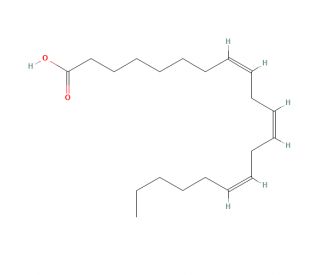

Dihomo-γ-linolenic Acid (20:3, n-6) (CAS 1783-84-2)
See product citations (2)
QUICK LINKS
Dihomo-γ-linolenic Acid (20:3, n-6) is long-chain polyunsaturated fatty acid, the natural biosynthetic precursor of prostaglandin E1 (PGE1, sc-201223), and an elongase product of gamma-linolenic acid. Dihomo-γ-linolenic Acid (20:3, n-6) is structurally similar to Arachidonic acid (AA, sc-200770), and both are recognized and transformed by cyclooxygenase and lipoxygenase enzymes into eicosanoid metabolites. The metabolites of AA produced in platelets, such as thromboxane A2, are proaggregatory. As Dihomo-γ-linolenic Acid (20:3, n-6) and AA compete for processing by these oxidation enzymes, introduction of Dihomo-gamma-linolenic Acid to platelets is correlated to suppression of AA metabolites and promotion of Dihomo-γ-linolenic Acid (20:3, n-6) metabolites such as PGE1, which produces an antithrombotic effect.
Dihomo-γ-linolenic Acid (20:3, n-6) (CAS 1783-84-2) References
- Mutational and X-ray crystallographic analysis of the interaction of dihomo-gamma -linolenic acid with prostaglandin endoperoxide H synthases. | Thuresson, ED., et al. 2001. J Biol Chem. 276: 10358-65. PMID: 11121413
- The orphan G protein-coupled receptor GPR40 is activated by medium and long chain fatty acids. | Briscoe, CP., et al. 2003. J Biol Chem. 278: 11303-11. PMID: 12496284
- Mouse peritoneal macrophage prostaglandin E1 synthesis is altered by dietary gamma-linolenic acid. | Fan, YY. and Chapkin, RS. 1992. J Nutr. 122: 1600-6. PMID: 1322453
- Isolation of a novel C18-Δ9 polyunsaturated fatty acid specific elongase gene from DHA-producing Isochrysis galbana H29 and its use for the reconstitution of the alternative Δ8 pathway in Saccharomyces cerevisiae. | Li, M., et al. 2011. Biotechnol Lett. 33: 1823-30. PMID: 21538137
- Oxidative metabolism of dihomogammalinolenic acid by guinea pig epidermis: evidence of generation of anti-inflammatory products. | Miller, CC., et al. 1988. Prostaglandins. 35: 917-38. PMID: 3141974
- Antithrombotic potential of dihomo-gamma-linolenic acid in man. | Kernoff, PB., et al. 1977. Br Med J. 2: 1441-4. PMID: 338112
- The effect of dihomo-gamma-linolenic acid (20: 3,n-6) on the composition of phospholipid fatty acids in the liver of rats deficient in essential fatty acids. | Hassam, AG. and Crawford,. 1978. Br J Nutr. 40: 155-7. PMID: 666999
- Interaction of sesamin and eicosapentaenoic acid against delta 5 desaturation and n-6/n-3 ratio of essential fatty acids in rat. | Umeda-Sawada, R., et al. 1995. Biosci Biotechnol Biochem. 59: 2268-73. PMID: 8611750
- Dietary supplementation with gamma-linolenic acid alters fatty acid content and eicosanoid production in healthy humans. | Johnson, MM., et al. 1997. J Nutr. 127: 1435-44. PMID: 9237935
- Importance of dietary gamma-linolenic acid in human health and nutrition. | Fan, YY. and Chapkin, RS. 1998. J Nutr. 128: 1411-4. PMID: 9732298
Ordering Information
| Product Name | Catalog # | UNIT | Price | Qty | FAVORITES | |
Dihomo-γ-linolenic Acid (20:3, n-6), 100 mg | sc-200780 | 100 mg | $153.00 | |||
Dihomo-γ-linolenic Acid (20:3, n-6), 1 g | sc-200780A | 1 g | $912.00 |