
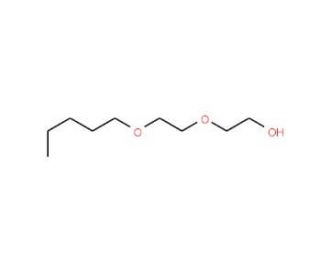

Diethylene glycol monopentyl ether (CAS 18912-81-7)
LINK RAPIDI
Il dietilenglicole monopentil etere, membro della famiglia dei glicoli eteri, eccelle come solvente grazie alla sua natura anfifilica unica, che combina proprietà idrofile e lipofile. Questa struttura chimica, caratterizzata da due gruppi etere legati a un gruppo pentile, ne aumenta la solubilità e le capacità di interazione con diverse sostanze. La sua azione principale consiste nell'interrompere il legame idrogeno nelle soluzioni acquose e nel facilitare le interazioni con i composti organici, migliorando così la solubilità di sostanze che in genere sono difficili da sciogliere. Questo solvente è ampiamente utilizzato nella ricerca sui polimeri, contribuendo a modificarne le proprietà e a migliorare la formulazione di vernici e rivestimenti, garantendo una dispersione uniforme dei pigmenti e caratteristiche di essiccazione ottimali. Inoltre, il suo ruolo si estende ai settori della produzione di inchiostri e delle soluzioni di pulizia industriale, dove la sua efficace solvibilità, la bassa tossicità e il profilo ambientale favorevole sono particolarmente apprezzati. La capacità del dietilenglicole monopentil etere di agire come solvente versatile supporta un'ampia gamma di applicazioni di ricerca, in particolare nello studio dei meccanismi di reazione e delle interazioni ambientali, rivelandosi così indispensabile nelle indagini scientifiche incentrate sulla dinamica dei solventi e sulle proprietà dei materiali.
Diethylene glycol monopentyl ether (CAS 18912-81-7) Referenze
- Modellazione QSPR di microemulsioni pseudoternarie formulate con tensioattivi a base di lecitina: applicazione di data mining, modellazione molecolare e statistica. | Taha, MO., et al. 2005. Int J Pharm. 295: 135-55. PMID: 15847999
- Tipizzazione dell'aptoglobina dai tessuti grassi dopo estrazione con detergenti non ionici. | Roy, R. 1991. Forensic Sci Int. 49: 95-102. PMID: 2032672
- Caratterizzazione dell'attività dell'estrone solfatasi nei trombociti umani. | Soliman, HR., et al. 1993. J Steroid Biochem Mol Biol. 46: 215-26. PMID: 8664170
- Previsione del comportamento delle fasi nei sistemi di microemulsione mediante reti neurali artificiali. | Richardson, CJ., et al. 1997. J Colloid Interface Sci. 187: 296-303. PMID: 9073401
- Aerosol di proteine con propellente a base di tetrafluoroetano (HFC 134A). | Brown, AR. and George, DW. 1997. Pharm Res. 14: 1542-7. PMID: 9434272
- Nuovi fenomeni interfacciali alle interfacce liquido-liquido del sistema tensioattivo a tre componenti acqua+ n-tetradecano+ C6E2. | Chen, L‐J. and W‐J. Yan. 1993. The Journal of chemical physics. 98.6: 4830-4837.
- Indagini sulla formazione e la caratterizzazione di microemulsioni fosfolipidiche. III. Diagrammi di fase pseudo-ternari di sistemi contenenti acqua-lecitina-isopropil miristato e un acido alcanoico, un'ammina, un alcanediolo, un polietilenglicole alchil etere o un alcol come cosurfattante. | Aboofazeli, R., et al. 1994. International journal of pharmaceutics. 111.1: 63-72.
- Gestione di un insieme di dati molto ampio per la determinazione della tensione superficiale di composti chimici utilizzando una strategia di relazione quantitativa struttura-proprietà. | Gharagheizi, Farhad, et al. 2011. Chemical engineering science. 66.21: 4991-5023.
- Estrazione idrotropica del punto di nuvola dei lipidi dalle microalghe: una nuova via per la produzione di biocarburanti. | Lebeuf, Raphaël, et al. 2021. Energy & Fuels. 35.24: 20151-20159.
Informazioni ordini
| Nome del prodotto | Codice del prodotto | UNITÀ | Prezzo | Quantità | Preferiti | |
Diethylene glycol monopentyl ether, 1 g | sc-326822 | 1 g | $213.00 | |||
Diethylene glycol monopentyl ether, 2.5 g | sc-326822A | 2.5 g | $421.00 |