
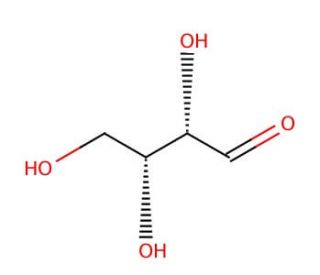

Molecular structure of D-(−)-Threose, CAS Number: 95-43-2
D-(−)-Threose (CAS 95-43-2)
CAS Number:
95-43-2
Purity:
≥60%
Molecular Weight:
120.10
Molecular Formula:
C4H8O4
For Research Use Only. Not Intended for Diagnostic or Therapeutic Use.
* Refer to Certificate of Analysis for lot specific data.
QUICK LINKS
Ordering Information
Description
Technical Information
Safety Information
SDS & Certificate of Analysis
D-(−)-Threose is primarily investigated in the fields of biochemistry and prebiotic chemistry for its role in the origins of life studies. This sugar is a key component in the exploration of the RNA world hypothesis, which suggests that RNA molecules were precursors to current life forms based on DNA and proteins. Research involving D-(−)-Threose often focuses on its ability to form part of alternative nucleic acid structures, potentially offering clues about the early mechanisms of genetic information storage and transfer. Additionally, this compound is used in synthetic chemistry to develop new methodologies for creating carbohydrates and analogs that mimic biological processes.
D-(−)-Threose (CAS 95-43-2) References
- Impact of phosphorus fertilizer level on the yield and metabolome of goji fruit. | Wei, F., et al. 2020. Sci Rep. 10: 14656. PMID: 32887902
- Metabolome and transcriptome analysis of flavor components and flavonoid biosynthesis in fig female flower tissues (Ficus carica L.) after bagging. | Wang, Z., et al. 2021. BMC Plant Biol. 21: 396. PMID: 34433422
- A draft genome, resequencing, and metabolomes reveal the genetic background and molecular basis of the nutritional and medicinal properties of loquat (Eriobotrya japonica (Thunb.) Lindl). | Wang, Y. 2021. Hortic Res. 8: 231. PMID: 34719689
- Metabolomics Analysis Reveals the Effects of Compound Fuzhuan Brick Tea (CFBT) on Regulating Dyslipidemia and Metabolic Disorders in Mice Induced by High-Fat Diet. | Zhou, X., et al. 2022. Nutrients. 14: PMID: 35334785
- Identification and analysis of major flavor compounds in radish taproots by widely targeted metabolomics. | Mei, S., et al. 2022. Front Nutr. 9: 889407. PMID: 35923198
- Metabolomic Analysis Revealed Distinct Physiological Responses of Leaves and Roots to Huanglongbing in a Citrus Rootstock. | Chen, Q., et al. 2022. Int J Mol Sci. 23: PMID: 36012507
- Changes in the Primary Metabolites of 'Fengtang' Plums during Storage Detected by Widely Targeted Metabolomics. | Lin, X., et al. 2022. Foods. 11: PMID: 36140954
- The mechanism of abscisic acid regulation of wild Fragaria species in response to cold stress. | Shen, J., et al. 2022. BMC Genomics. 23: 670. PMID: 36162976
- Taste Compound Generation and Variation in Chinese Water Chestnut (Eleocharis dulcis (Burm.f.) Trin. ex Hensch.) Processed with Different Methods by UPLC-MS/MS and Electronic Tongue System. | Li, G., et al. 2022. Foods. 11: PMID: 36496675
- Physiological and metabolomic analysis reveals maturity stage-dependent nitrogen regulation of vitamin C content in pepper fruit. | Zhang, L., et al. 2022. Front Plant Sci. 13: 1049785. PMID: 36714702
- A molecular atlas reveals the tri-sectional spinning mechanism of spider dragline silk. | Hu, W., et al. 2023. Nat Commun. 14: 837. PMID: 36792670
- ZjFAS2 is involved in the fruit coloration in Ziziphus jujuba Mill. by regulating anthocyanin accumulation. | Li, S., et al. 2023. Front Plant Sci. 14: 1142757. PMID: 36968382
- Integrative Analysis of Metabolome and Transcriptome Reveals Molecular Insight into Metabolomic Variations during Hawthorn Fruit Development. | Wang, Y., et al. 2023. Metabolites. 13: PMID: 36984863
Inhibitor of:
COL9A1.Activator of:
Aldose Reductase, and RAGE.Ordering Information
| Product Name | Catalog # | UNIT | Price | Qty | FAVORITES | |
D-(−)-Threose, 50 mg | sc-214795 | 50 mg | $73.00 |