
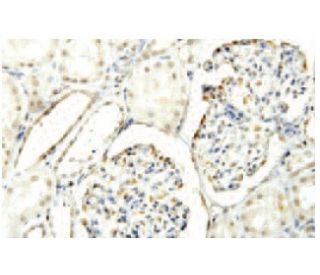

CSDA Antibody (A-2L): sc-130419
- CSDA Antibody (A-2L) is a mouse monoclonal IgG2b κ CSDA antibody provided at 100 µg/ml
- raised against recombinant CSDA of human origin
- recommended for detection of CSDA of human origin by IF, IHC(P) and ELISA
- At present, we have not yet completed the identification of the preferred secondary detection reagent(s) for CSDA Antibody (A-2L). This work is in progress.

QUICK LINKS
CSDA Antibody (A-2L) is a mouse monoclonal IgG2b kappa light chain antibody that detects CSDA protein of human origin by immunofluorescence (IF), immunohistochemistry with paraffin-embedded sections (IHCP), and enzyme-linked immunosorbent assay (ELISA). Anti-CSDA antibody (A-2L) is available as a non-conjugated format. CSDA protein, also known as cold shock domain protein A, DBPA, CSDA1, or zonula occludens 1-associated nucleic acid-binding protein (ZONAB), is a 372 amino acid protein predominantly located in nucleus and cytoplasm, with high expression levels in skeletal muscle and heart tissues. CSDA contains a cold-shock domain, which is crucial for binding to specific RNA sequences, including GM-CSF promoter and various mRNA molecules. CSDA interaction with these RNA elements is vital for regulating gene expression, particularly in translation repression. CSDA forms a complex with MSY2, a member of Y-box family of proteins that play significant roles in both transcription and translation regulation. Through involvement in promoting cell proliferation and expression of key proteins such as cyclin D1 and proliferating cell nuclear antigen (PCNA), CSDA is essential for cellular responses to changes in epithelial density, thereby influencing balance between cell proliferation and differentiation through intricate transcriptional networks.
Alexa Fluor® is a trademark of Molecular Probes Inc., OR., USA
LI-COR® and Odyssey® are registered trademarks of LI-COR Biosciences
CSDA Antibody (A-2L) References:
- Expression of zonula occludens-1 (ZO-1) and the transcription factor ZO-1-associated nucleic acid-binding protein (ZONAB)-MsY3 in glial cells and colocalization at oligodendrocyte and astrocyte gap junctions in mouse brain. | Penes, MC., et al. 2005. Eur J Neurosci. 22: 404-18. PMID: 16045494
- Regulation of PCNA and cyclin D1 expression and epithelial morphogenesis by the ZO-1-regulated transcription factor ZONAB/DbpA. | Sourisseau, T., et al. 2006. Mol Cell Biol. 26: 2387-98. PMID: 16508013
- Functional interaction between the ZO-1-interacting transcription factor ZONAB/DbpA and the RNA processing factor symplekin. | Kavanagh, E., et al. 2006. J Cell Sci. 119: 5098-105. PMID: 17158914
- Phosphatidylethanol accumulation promotes intestinal hyperplasia by inducing ZONAB-mediated cell density increase in response to chronic ethanol exposure. | Pannequin, J., et al. 2007. Mol Cancer Res. 5: 1147-57. PMID: 18025260
- Ablation of Cx47 in transgenic mice leads to the loss of MUPP1, ZONAB and multiple connexins at oligodendrocyte-astrocyte gap junctions. | Li, X., et al. 2008. Eur J Neurosci. 28: 1503-17. PMID: 18973575
- The symplekin/ZONAB complex inhibits intestinal cell differentiation by the repression of AML1/Runx1. | Buchert, M., et al. 2009. Gastroenterology. 137: 156-64, 164.e1-3. PMID: 19328795
- The Y-box factor ZONAB/DbpA associates with GEF-H1/Lfc and mediates Rho-stimulated transcription. | Nie, M., et al. 2009. EMBO Rep. 10: 1125-31. PMID: 19730435
- ZONAB promotes proliferation and represses differentiation of proximal tubule epithelial cells. | Lima, WR., et al. 2010. J Am Soc Nephrol. 21: 478-88. PMID: 20133480
- Symplekin promotes tumorigenicity by up-regulating claudin-2 expression. | Buchert, M., et al. 2010. Proc Natl Acad Sci U S A. 107: 2628-33. PMID: 20133805
Ordering Information
| Product Name | Catalog # | UNIT | Price | Qty | FAVORITES | |
CSDA Antibody (A-2L) | sc-130419 | 100 µg/ml | $339.00 |