

Cresyl violet (CAS 41830-80-2)
QUICK LINKS
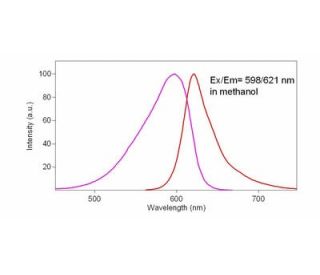
Cresyl Violet, a synthetic dye with a longstanding history in scientific research. As a cationic dye, it proves invaluable in staining a diverse array of biological specimens, ranging from cells and tissues to microorganisms. In the realm of histology, Cresyl Violet has gained prominence for its ability to effectively stain cells and tissues, enabling their microscopic examination. Microbiology, on the other hand, benefits from this dye′s capacity to stain microorganisms, facilitating identification and classification. Within neuroscience, Cresyl Violet perchlorate emerges as useful for staining neurons and other neural structures, enabling detailed microscopic examination and analysis. The mechanism through which Cresyl Violet operates involves binding to negatively charged structures present in cells and tissues. Notably, it exhibits a pronounced affinity for nucleic acids, with a particular predilection for RNA. By binding to RNA, Cresyl Violet enhances its visibility under a microscope, thus enabling researchers to explore the intricate structure and function of RNA within cells and tissues. This capability opens avenues for deeper insights into cellular and molecular processes.
Cresyl violet (CAS 41830-80-2) References
- Cresyl violet as a fluorophore in confocal laser scanning microscopy for future in-vivo histopathology. | George, M. and Meining, A. 2003. Endoscopy. 35: 585-9. PMID: 12822093
- Single-molecule fluorescence spectroelectrochemistry of cresyl violet. | Lei, C., et al. 2008. Chem Commun (Camb). 5490-2. PMID: 18997928
- Cresyl violet: a red fluorescent Nissl stain. | Alvarez-Buylla, A., et al. 1990. J Neurosci Methods. 33: 129-33. PMID: 2232864
- Mouse model of intraluminal MCAO: cerebral infarct evaluation by cresyl violet staining. | Rousselet, E., et al. 2012. J Vis Exp.. PMID: 23168377
- Cresyl violet: a rapid, simple, easily interpretable stain for detecting Pneumocystis carinii in sputum. | Moas, CM., et al. 1989. South Med J. 82: 957-9. PMID: 2474858
- A cresyl violet-based fluorescent off-on probe for the detection and imaging of hypoxia and nitroreductase in living organisms. | Wan, QQ., et al. 2014. Chem Asian J. 9: 2058-62. PMID: 24920341
- Analytical and preparative chromatographic procedures for obtaining pure cresyl violet and cresyl red from commercial cresyl violet. | Urrutia, MN. and Ortiz, CS. 2015. Biotech Histochem. 90: 159-66. PMID: 25358291
- Cresyl violet: a superior fluorescent lysosomal marker. | Ostrowski, PP., et al. 2016. Traffic. 17: 1313-1321. PMID: 27621028
- PLGA nano/microparticles loaded with cresyl violet as a tracer for drug delivery: Characterization and in-situ hyperspectral fluorescence and 2-photon localization. | Lunardi, CN., et al. 2017. Mater Sci Eng C Mater Biol Appl. 70: 505-511. PMID: 27770922
- Cresyl Violet Adsorption on Sonicated Graphite Oxide. | Coello-Fiallos, D., et al. 2018. J Nanosci Nanotechnol. 18: 3006-3011. PMID: 29442987
- Cresyl violet as a new contrast agent in probe-based confocal laser endomicroscopy for in vivo diagnosis of gastric intestinal metaplasia. | Sun, YN., et al. 2020. J Gastroenterol Hepatol. 35: 453-460. PMID: 31518444
- Labeling Acidic Compartments of Neutrophils with Cresyl Violet. | Ostrowski, PP., et al. 2020. Methods Mol Biol. 2087: 207-213. PMID: 31728993
- Computational Study of Cresyl Violet Covalently Attached to the Silane Coupling Agents: Application to TiO2-Based Photocatalysts and Dye-Sensitized Solar Cells. | Takeshita, T. 2020. Nanomaterials (Basel). 10: PMID: 33019555
Ordering Information
| Product Name | Catalog # | UNIT | Price | Qty | FAVORITES | |
Cresyl violet, 100 mg | sc-481988 | 100 mg | $107.00 |