
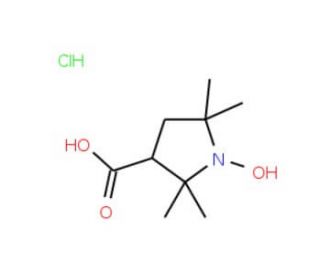

CPH hydrochloride (CAS 92416-28-9)
QUICK LINKS
CPH hydrochloride stands out in the realm of analytical chemistry and biochemical research as a potent and cell-permeable spin trap, specifically tailored for the detection of superoxide radicals and peroxynitrite in vitro environments. Its non-toxic nature ensures it can be utilized in various experimental applications without compromising the integrity of the samples. Remarkably, CPH hydrochloride demonstrates a robust resistance to reduction by common reducing agents such as vitamin C and thiols, enhancing its stability and reliability in experiments. This attribute is particularly in studies focusing on oxidative stress and reactive oxygen species (ROS), where precise and undisturbed detection of these reactive molecules is essential.
CPH hydrochloride (CAS 92416-28-9) References
- Targeting of phospholamban by peroxynitrite decreases beta-adrenergic stimulation in cardiomyocytes. | Kohr, MJ., et al. 2008. Cardiovasc Res. 77: 353-61. PMID: 18006474
- Biphasic effect of SIN-1 is reliant upon cardiomyocyte contractile state. | Kohr, MJ., et al. 2008. Free Radic Biol Med. 45: 73-80. PMID: 18433725
- Evaluation of the antioxidant properties of N-acetylcysteine in human platelets: prerequisite for bioconversion to glutathione for antioxidant and antiplatelet activity. | Gibson, KR., et al. 2009. J Cardiovasc Pharmacol. 54: 319-26. PMID: 19668088
- Rons formation under restrictive reperfusion does not affect organ dysfunction early after hemorrhage and trauma. | Zifko, C., et al. 2010. Shock. 34: 384-9. PMID: 20844412
- EPR detection of cellular and mitochondrial superoxide using cyclic hydroxylamines. | Dikalov, SI., et al. 2011. Free Radic Res. 45: 417-30. PMID: 21128732
- Ceruloplasmin (ferroxidase) oxidizes hydroxylamine probes: deceptive implications for free radical detection. | Ganini, D., et al. 2012. Free Radic Biol Med. 53: 1514-21. PMID: 22824865
- Deciphering the underlying mechanisms of oxidation-state dependent cytotoxicity of graphene oxide on mammalian cells. | Zhang, W., et al. 2015. Toxicol Lett. 237: 61-71. PMID: 26047786
- ErbB2 overexpression upregulates antioxidant enzymes, reduces basal levels of reactive oxygen species, and protects against doxorubicin cardiotoxicity. | Belmonte, F., et al. 2015. Am J Physiol Heart Circ Physiol. 309: H1271-80. PMID: 26254336
- Different metabolic activity in placental and reflected regions of the human amniotic membrane. | Banerjee, A., et al. 2015. Placenta. 36: 1329-32. PMID: 26386652
- Formation of iron oxide/Pd hybrid nanostructures with enhanced peroxidase-like activity and catalytic reduction of 4-nitrophenol. | Li, J., et al. 2017. J Environ Sci Health C Environ Carcinog Ecotoxicol Rev. 35: 159-172. PMID: 28532274
- Cellular and Site-Specific Mitochondrial Characterization of Vital Human Amniotic Membrane. | Banerjee, A., et al. 2018. Cell Transplant. 27: 3-11. PMID: 29562784
- Use of Electron Paramagnetic Resonance (EPR) to Evaluate Redox Status in a Preclinical Model of Acute Lung Injury. | Elajaili, HB., et al. 2023. Mol Imaging Biol. 1-8. PMID: 37193807
- Oxidative potential of silver nanoparticles measured by electron paramagnetic resonance spectroscopy | Hellack, B., Nickel, C., & Schins, R. P. 2017. Journal of Nanoparticle Research. 19: 1-6.
Ordering Information
| Product Name | Catalog # | UNIT | Price | Qty | FAVORITES | |
CPH hydrochloride, 10 mg | sc-221439 | 10 mg | $218.00 | |||
CPH hydrochloride, 50 mg | sc-221439A | 50 mg | $832.00 |