
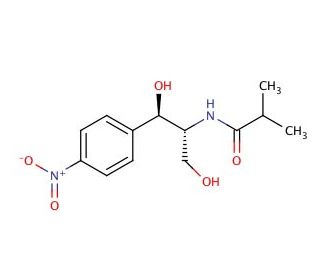

Corynecin III (CAS 18048-95-8)
QUICK LINKS
Corynecin III is a secondary metabolite produced by Corynebacterium species, extensively studied for its antibacterial properties and its role in microbial interactions. The mechanism of action of Corynecin III involves inhibition of protein synthesis by targeting the bacterial ribosome, thereby preventing the translation process. This interference with protein synthesis results in the disruption of essential cellular functions and ultimately leads to bacterial cell death. In research, Corynecin III has been used to explore the detailed interactions between antibiotics and ribosomal subunits, providing valuable insights into the mechanics of protein synthesis and the development of antibiotic resistance. Studies have employed techniques such as X-ray crystallography and cryo-electron microscopy to visualize the binding sites and conformational changes induced by Corynecin III on the ribosome. Additionally, it serves as a model compound for the development of novel antibiotics targeting the ribosome, particularly in the context of overcoming resistance mechanisms. Corynecin III is also utilized in investigating the natural biosynthetic pathways of Corynebacterium, aiding in the understanding of microbial secondary metabolism. Its role in these pathways is explaind through genetic and enzymatic studies, which provide a broader understanding of how these metabolites are produced and regulated. Overall, Corynecin III is a crucial compound in microbiological and biochemical research, contributing significantly to the understanding of protein synthesis inhibition and antibiotic resistance.
Corynecin III (CAS 18048-95-8) References
- Exploration of Chemical Diversity and Antitrypanosomal Activity of Some Red Sea-Derived Actinomycetes Using the OSMAC Approach Supported by LC-MS-Based Metabolomics and Molecular Modelling. | Gamaleldin, NM., et al. 2020. Antibiotics (Basel). 9: PMID: 32971728
- Exploring the Diversity and Antibacterial Potentiality of Cultivable Actinobacteria from the Soil of the Saxaul Forest in Southern Gobi Desert in Mongolia. | Liu, SW., et al. 2022. Microorganisms. 10: PMID: 35630432
- Biotechnological Key Genes of the Rhodococcus erythropolis MGMM8 Genome: Genes for Bioremediation, Antibiotics, Plant Protection, and Growth Stimulation. | Afordoanyi, DM., et al. 2023. Microorganisms. 12: PMID: 38257915
- Complete genome sequence of a novel Prescottella sp. R16 isolate from deep-sea sediments in the western Pacific. | Ma, L., et al. 2024. Front Genet. 15: 1356956. PMID: 38549861
- Blastococcus brunescens sp. nov., a member of the Geodermatophilaceae isolated from sandstone collected from the Sahara Desert in Tunisia. | Hezbri, K., et al. 2024. Int J Syst Evol Microbiol. 74: PMID: 38568050
- Production of Antibacterial Compounds Analogous to Chloramphenicol by a n-Paraffin-grown Bacterium | T Suzuki, H Honda, R Katsumata. 1972. Agricultural and Biological Chemistry. 36: 2223-2228.
Ordering Information
| Product Name | Catalog # | UNIT | Price | Qty | FAVORITES | |
Corynecin III, 5 mg | sc-391479 | 5 mg | $125.00 |