
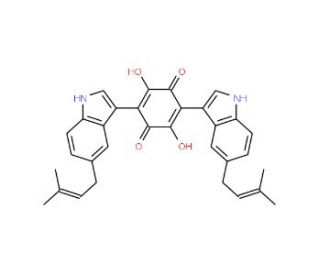

Cochliodinol (CAS 11051-88-0)
QUICK LINKS
Cochliodinol is a naturally occurring fungal metabolite, primarily extracted from species within the genus Cochliobolus, known for producing various bioactive secondary metabolites. Structurally, cochliodinol is characterized by its unique aromatic and heterocyclic components, which are believed to play a central role in its bioactivity. The chemical′s mechanisms of action, though not fully explaind, are thought to involve interaction with cellular macromolecules, particularly affecting the function of proteins and nucleic acids. Research into the activities of cochliodinol has shown it can alter the expression of certain genes, potentially impacting signaling pathways within cells. This has made cochliodinol a subject of interest in the study of gene expression regulation and cellular response to external bioactive compounds. In research contexts, cochliodinol has been used to explore its effects on fungal physiology and its potential as a lead compound for the development of agents that can modify genetic expression. Studies have also investigated its role in inducing production of reactive oxygen species and modulating antioxidant defense mechanisms in cells, providing insights into how natural products can influence cellular oxidative stress pathways. These investigations contribute to a deeper understanding of the biological activities of fungal metabolites and their potential applications in various fields of biotechnology and genetic research.
Cochliodinol (CAS 11051-88-0) References
- Antimicrobial and cytotoxic secondary metabolites from tropical leaf endophytes: Isolation of antibacterial agent pyrrocidine C from Lewia infectoria SNB-GTC2402. | Casella, TM., et al. 2013. Phytochemistry. 96: 370-7. PMID: 24189345
- Indole Alkaloids from Chaetomium globosum. | Xu, GB., et al. 2015. J Nat Prod. 78: 1479-85. PMID: 26125976
- Community composition, bacterial symbionts, antibacterial and antioxidant activities of honeybee-associated fungi. | Cui, P., et al. 2022. BMC Microbiol. 22: 168. PMID: 35761187
- Amesia hispanica sp. nov., Producer of the Antifungal Class of Antibiotics Dactylfungins. | Charria-Girón, E., et al. 2023. J Fungi (Basel). 9: PMID: 37108917
- The toxicity of cochliodinol, an antibiotic metabolite of Chaetomium spp. | Brewer, D., et al. 1970. Can J Microbiol. 16: 433-40. PMID: 4987295
- The effect of cochliodinol, a metabolite of Chaetomium cochliodes, on the respiration of microsopores of Fusarium oxysporum. | Meiler, D. and Taylor, A. 1971. Can J Microbiol. 17: 83-6. PMID: 5555523
- The production of cochliodinol and a related metabolite by Chaetomium species. | Brewer, D., et al. 1968. Can J Microbiol. 14: 861-6. PMID: 5667338
- The antibacterial activity of some naturally occurring 2,5-dihydroxy-1,4-benzoquinones. | Brewer, D., et al. 1984. Can J Microbiol. 30: 1068-72. PMID: 6541963
- Isolation and structure elucidation of five new asterriquinones from Aspergillus, Humicola and Botryotrichum species. | Mocek, U., et al. 1996. J Antibiot (Tokyo). 49: 854-9. PMID: 8931717
- Mechanism of the cytotoxicity of asterriquinone, a metabolite of Aspergillus terreus. | Kaji, A., et al. 1997. Anticancer Res. 17: 3675-9. PMID: 9413222
Ordering Information
| Product Name | Catalog # | UNIT | Price | Qty | FAVORITES | |
Cochliodinol, 500 µg | sc-202108 | 500 µg | $155.00 |