
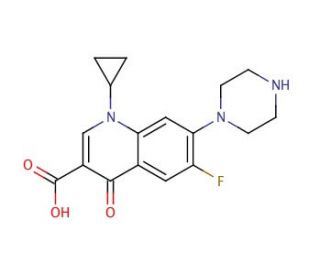

Ciprofloxacin (CAS 85721-33-1)
See product citations (8)
QUICK LINKS
Protein Tyrosine Phosphatase Receptor (PTPR) signaling encompasses a critical aspect of cellular communication, involving a group of enzymes that specifically dephosphorylate tyrosine residues on proteins. These enzymes play a pivotal role in regulating various cellular processes, including cell growth, differentiation, and metabolic control. PTPRs are characterized by their ability to transduce signals across the cell membrane, with a receptor-like structure that includes an extracellular domain, a single transmembrane segment, and an intracellular phosphatase domain. They function by counteracting the activity of protein tyrosine kinases, thereby maintaining a balance in cellular signaling pathways. The signaling mediated by PTPRs is essential for normal physiological functions and, when dysregulated, can contribute to the pathogenesis of diseases such as cancer, diabetes, and autoimmune disorders. PTPR receptor class possess an extracellular region containing fibronectin type III repeats, a transmembrane region, and a intracytoplasmic catalytic domain. Targeting Protein Tyrosine Phosphatase Receptors (PTPRs) for disruption or inhibition involves selectively modulating the activity of these enzymes to influence their role in cellular signaling pathways. Since PTPRs act as critical regulators of tyrosine phosphorylation, their inhibition can lead to increased phosphorylation levels on specific substrates, thereby affecting downstream signaling cascades. This is particularly relevant in contexts where PTPRs negatively regulate pathways that promote cell growth, survival, and differentiation. The development of inhibitors for PTPRs often focuses on molecules that can bind to the phosphatase active site, blocking its ability to dephosphorylate substrates.
Ciprofloxacin (CAS 85721-33-1) References
- 99mTc-ciprofloxacin DRAXIMAGE. | Tossing, G. 2004. IDrugs. 7: 374-9. PMID: 15057643
- Oral ciprofloxacin for osteomyelitis. | MacGregor, RR., et al. 1990. Orthopedics. 13: 55-60. PMID: 2300517
- CCl₄-Enhanced Ultrasonic Irradiation for Ciprofloxacin Degradation and Antibiotic Activity. | Wei, H., et al. 2018. Water Environ Res. 90: 579-588. PMID: 30188276
- A Consolidated and Continuous Synthesis of Ciprofloxacin from a Vinylogous Cyclopropyl Amide. | Tosso, NP., et al. 2019. J Org Chem. 84: 3370-3376. PMID: 30786209
- Ciprofloxacin in management of urinary tract infection. | Tolkoff-Rubin, NE. and Rubin, RH. 1988. Urology. 31: 359-67. PMID: 3281368
- Ciprofloxacin. A review of its antibacterial activity, pharmacokinetic properties and therapeutic use. | Campoli-Richards, DM., et al. 1988. Drugs. 35: 373-447. PMID: 3292209
- Ciprofloxacin and norfloxacin, two fluoroquinolone antimicrobials. | Nix, DE. and DeVito, JM. 1987. Clin Pharm. 6: 105-17. PMID: 3311572
- [Ciprofloxacin: pharmacokinetics and a potential for therapeutic monitoring]. | Urbánek, K. and Kubíčková, V. 2021. Klin Mikrobiol Infekc Lek. 27: 142-147. PMID: 35220574
- Toxicity induced by ciprofloxacin and enrofloxacin: oxidative stress and metabolism. | Badawy, S., et al. 2021. Crit Rev Toxicol. 51: 754-787. PMID: 35274591
- Drug interactions of ciprofloxacin with other non-antibiotic agents. | Rubinstein, E. and Segev, S. 1987. Am J Med. 82: 119-23. PMID: 3555026
- The resistance mechanisms of bacteria against ciprofloxacin and new approaches for enhancing the efficacy of this antibiotic. | Shariati, A., et al. 2022. Front Public Health. 10: 1025633. PMID: 36620240
- Ciprofloxacin. A review of its pharmacological profile and therapeutic use in the elderly. | Wiseman, LR. and Balfour, JA. 1994. Drugs Aging. 4: 145-73. PMID: 8186542
- Ciprofloxacin. An updated review of its pharmacology, therapeutic efficacy and tolerability. | Davis, R., et al. 1996. Drugs. 51: 1019-74. PMID: 8736621
Ordering Information
| Product Name | Catalog # | UNIT | Price | Qty | FAVORITES | |
Ciprofloxacin, 1 g | sc-217900 | 1 g | $42.00 |