
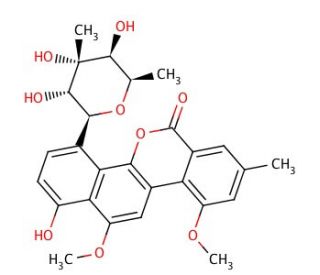

Chrysomycin B (CAS 83852-56-6)
QUICK LINKS
Chrysomycin B, bearing the CAS number 83852-56-6, is a chemical compound closely related to Chrysomycin A and belongs to the aureolic acid group of natural products. This group is characterized by its tricyclic aromatic core linked to sugar residues, a structural hallmark that confers a range of biological interactions, particularly with nucleic acids. Like its counterpart, Chrysomycin B interacts with DNA, but it primarily targets the minor groove of the DNA helix. This binding leads to alterations in the DNA structure that impede proper transcriptional processes. The mechanism involves the stabilization of the DNA in a conformation that is unfavorable for the binding and progression of RNA polymerase, thereby halting the transcription process. In scientific research, Chrysomycin B has been used as a tool to probe the structural and functional dynamics of DNA and DNA-dependent processes. By studying the effects of Chrysomycin B on DNA, researchers gain valuable insights into the impact of minor groove binders on transcriptional regulation and DNA replication. Additionally, the use of Chrysomycin B in experiments helps explain the pathways of cellular response to DNA stress, contributing to our understanding of cellular mechanisms that maintain genomic stability in the face of chemical interference.
Chrysomycin B (CAS 83852-56-6) References
- Histone H3 and heat shock protein GRP78 are selectively cross-linked to DNA by photoactivated gilvocarcin V in human fibroblasts. | Matsumoto, A. and Hanawalt, PC. 2000. Cancer Res. 60: 3921-6. PMID: 10919670
- A colorimetric microassay for the detection of agents that interact with DNA. | Burres, NS., et al. 1992. J Nat Prod. 55: 1582-7. PMID: 1479377
- Angucyclines: Biosynthesis, mode-of-action, new natural products, and synthesis. | Kharel, MK., et al. 2012. Nat Prod Rep. 29: 264-325. PMID: 22186970
- Antitumor activity of chrysomycins M and V. | Matson, JA., et al. 1989. J Antibiot (Tokyo). 42: 1446-8. PMID: 2793599
- Structures and biological activities of novel 4'-acetylated analogs of chrysomycins A and B. | Wada, SI., et al. 2017. J Antibiot (Tokyo). 70: 1078-1082. PMID: 28874850
- Comprehensive Genomic Analysis of Marine Strain Streptomyces sp. 891, an Excellent Producer of Chrysomycin A with Therapeutic Potential. | Hu, X., et al. 2022. Mar Drugs. 20: PMID: 35621938
- Chrysomycin A Inhibits the Proliferation, Migration and Invasion of U251 and U87-MG Glioblastoma Cells to Exert Its Anti-Cancer Effects. | Liu, DN., et al. 2022. Molecules. 27: PMID: 36234681
- Biosynthesis of chrysomycins A and B. Origin of the chromophore. | Carter, GT., et al. 1985. J Antibiot (Tokyo). 38: 242-8. PMID: 3997669
- The chemistry of the antibiotics chrysomycin A and B. Antitumor activity of chrysomycin A. | Weiss, U., et al. 1982. J Antibiot (Tokyo). 35: 1194-201. PMID: 7142022
- Biochemical characterisation of elsamicin and other coumarin-related antitumour agents as potent inhibitors of human topoisomerase II. | Lorico, A. and Long, BH. 1993. Eur J Cancer. 29A: 1985-91. PMID: 8280493
Ordering Information
| Product Name | Catalog # | UNIT | Price | Qty | FAVORITES | |
Chrysomycin B, 250 µg | sc-202100 | 250 µg | $142.00 | |||
Chrysomycin B, 1 mg | sc-202100A | 1 mg | $420.00 |