
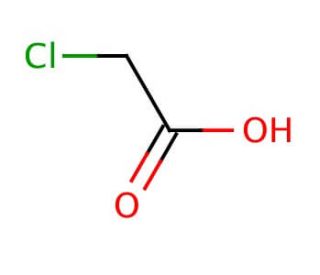

Chloroacetic acid (CAS 79-11-8)
QUICK LINKS
Chloroacetic acid, a halogenated organic compound, has garnered significant attention in scientific research due to its versatile applications in various fields. One of the prominent mechanisms of action of chloroacetic acid lies in its role as a chemical building block in organic synthesis. Its high reactivity enables it to participate in a wide range of chemical reactions, including nucleophilic substitution, esterification, and condensation reactions. As a result, chloroacetic acid serves as a precursor for the synthesis of numerous organic compounds, such as pharmaceutical intermediates, agrochemicals, and specialty chemicals. Additionally, chloroacetic acid finds extensive use in the production of carboxymethyl cellulose (CMC), a water-soluble polymer widely employed in industries ranging from food and pharmaceuticals to cosmetics and detergents. Furthermore, chloroacetic acid derivatives are utilized in the synthesis of herbicides and pesticides due to their ability to inhibit key enzymatic processes in plants and pests, thus contributing to advancements in agricultural research and crop protection. Moreover, chloroacetic acid derivatives have been investigated for their potential applications in the synthesis of novel materials, such as polymer composites, nanoparticles, and functionalized surfaces, offering promising avenues for research in materials science and nanotechnology. Overall, the multifaceted mechanisms and research applications of chloroacetic acid underscore its significance as a valuable chemical tool in diverse scientific disciplines, driving innovation and discovery in organic chemistry, materials science, and agricultural research.
Chloroacetic acid (CAS 79-11-8) References
- Chloroacetic acid induced neuronal cells death through oxidative stress-mediated p38-MAPK activation pathway regulated mitochondria-dependent apoptotic signals. | Chen, CH., et al. 2013. Toxicology. 303: 72-82. PMID: 23103613
- Chloroacetic acid triggers apoptosis in neuronal cells via a reactive oxygen species-induced endoplasmic reticulum stress signaling pathway. | Lu, TH., et al. 2015. Chem Biol Interact. 225: 1-12. PMID: 25451595
- Monohaloacetic acid drinking water disinfection by-products inhibit follicle growth and steroidogenesis in mouse ovarian antral follicles in vitro. | Jeong, CH., et al. 2016. Reprod Toxicol. 62: 71-6. PMID: 27151372
- Chitosan functionalization of titanium and Ti6Al4V alloy with chloroacetic acid as linker agent. | Battocchio, C., et al. 2019. Mater Sci Eng C Mater Biol Appl. 99: 1133-1140. PMID: 30889647
- Cr(VI) and Pb(II) capture on pH-responsive polyethyleneimine and chloroacetic acid functionalized chitosan microspheres. | Zhu, W., et al. 2019. Carbohydr Polym. 219: 353-367. PMID: 31151535
- In vitro toxicity and molecular interacting mechanisms of chloroacetic acid to catalase. | Wang, J., et al. 2020. Ecotoxicol Environ Saf. 189: 109981. PMID: 31812021
- Chemoselective Tertiary C-H Hydroxylation for Late-Stage Functionalization with Mn(PDP)/Chloroacetic Acid Catalysis. | Chambers, RK., et al. 2020. Adv Synth Catal. 362: 417-423. PMID: 32165875
- [Determination of chloroacetic acid in workplace air by silanization-gas chromatography]. | Wang, P., et al. 2021. Zhonghua Lao Dong Wei Sheng Zhi Ye Bing Za Zhi. 39: 299-302. PMID: 33910294
- One-Pot Regioselective Diacylation of Pyranoside 1,2-cis Diols. | Kim, T., et al. 2022. J Org Chem. 87: 4894-4907. PMID: 35290061
- Carboxymethylcellulose-Based Hydrogel Obtained from Bacterial Cellulose. | Kunjalukkal Padmanabhan, S., et al. 2023. Molecules. 28: PMID: 36677887
- Toxicity effects of disinfection byproduct chloroacetic acid to Microcystis aeruginosa: Cytotoxicity and mechanisms. | Ye, J., et al. 2023. J Environ Sci (China). 129: 229-239. PMID: 36804238
Ordering Information
| Product Name | Catalog # | UNIT | Price | Qty | FAVORITES | |
Chloroacetic acid, 100 g | sc-211072 | 100 g | $48.00 |