
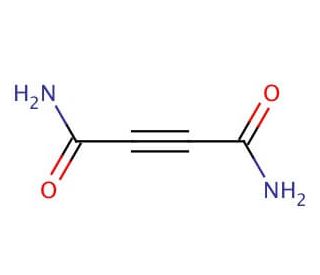

Cellocidin (CAS 543-21-5)
QUICK LINKS
Cellocidin, a polycyclic antibiotic, has been a focal point in microbiological and biochemical research due to its unique mechanism of action and broad-spectrum antibacterial properties. It functions by disrupting bacterial cell wall synthesis and membrane integrity, leading to cell lysis and death. Specifically, cellocidin targets the peptidoglycan layer in bacterial cell walls, interfering with cross-linking processes essential for cell wall strength and rigidity. This compound has been instrumental in studies exploring bacterial resistance mechanisms, particularly in Gram-positive bacteria. Researchers have utilized cellocidin to investigate its interactions with bacterial enzymes involved in cell wall biosynthesis, providing insights into its bactericidal efficacy. Additionally, cellocidin has been used in structural biology to explain the three-dimensional configurations of enzyme-inhibitor complexes through techniques like X-ray crystallography and nuclear magnetic resonance (NMR) spectroscopy. These studies have highlighted its binding affinity and specificity for bacterial targets, offering a blueprint for the design of new antibacterial agents. Recent research has also focused on modifying cellocidin′s chemical structure to enhance its activity and stability, aiming to overcome resistance issues and broaden its antibacterial spectrum. As a result, cellocidin continues to be a valuable tool in the development of novel antibiotics and the understanding of bacterial cell wall synthesis and resistance mechanisms.
Cellocidin (CAS 543-21-5) References
- Cellocidin, a new antibiotic. | SUZUKI, S., et al. 1958. J Antibiot (Tokyo). 11: 81-3. PMID: 13563326
- The structure of cellocidin. | SUZUKI, S. and OKUMA, K. 1958. J Antibiot (Tokyo). 11: 84-6. PMID: 13563327
- Selective and potent in vitro antitrypanosomal activities of ten microbial metabolites. | Otoguro, K., et al. 2008. J Antibiot (Tokyo). 61: 372-8. PMID: 18667785
- Small molecule growth inhibitors of human oncogenic gammaherpesvirus infected B-cells. | Dzeng, RK., et al. 2015. Mol Oncol. 9: 365-76. PMID: 25306391
- AGL-Score: Algebraic Graph Learning Score for Protein-Ligand Binding Scoring, Ranking, Docking, and Screening. | Nguyen, DD. and Wei, GW. 2019. J Chem Inf Model. 59: 3291-3304. PMID: 31257871
- In silico analysis of antiviral phytochemicals efficacy against Epstein-Barr virus glycoprotein H. | Jakhmola, S., et al. 2022. J Biomol Struct Dyn. 40: 5372-5385. PMID: 33438528
- Metabolomic Response of the Creeping Wood Sorrel Oxalis corniculata to Low-Dose Radiation Exposure from Fukushima's Contaminated Soil. | Sakauchi, K., et al. 2021. Life (Basel). 11: PMID: 34575139
- Natural acetylenes. 38. Biosyntheses of acetylenedicarboxamide (cellocidin) in Streptomyces SF-536 cultures. | Jones, ER., et al. 1973. J Chem Soc Perkin 1. 2: 148-50. PMID: 4736298
- Increase in lytic activity in competent cells of Bacillus subtilis after uptake of deoxyribonucleic acid. | Stewart, CR. and Marmur, J. 1970. J Bacteriol. 101: 449-55. PMID: 4984074
- Antagonistic mechanism of sulfhydryl compounds on cellocidin activity. | Yoneyama, K., et al. 1978. J Antibiot (Tokyo). 31: 1065-6. PMID: 711614
Ordering Information
| Product Name | Catalog # | UNIT | Price | Qty | FAVORITES | |
Cellocidin, 5 mg | sc-391762 | 5 mg | $100.00 | |||
Cellocidin, 25 mg | sc-391762A | 25 mg | $350.00 |