
Date published: 2026-5-6

1-800-457-3801

SCBT Portrait Logo
Seach Input

CD15 Antibody (C3D-1): sc-19648

4.6(11)
Write a reviewAsk a question

Datasheets
  • CD15 Antibody (C3D-1) is a mouse monoclonal IgM κ CD15 antibody, cited in 11 publications, provided at 200 µg/ml
  • raised against purified neutrophils of human origin
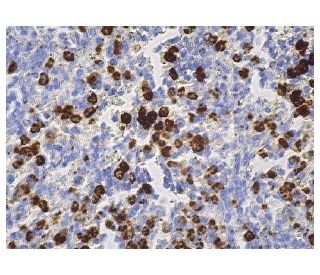
  • recommended for detection of CD15 of mouse, rat and human origin by WB, IP, IF, IHC(P) and FCM
  • also available conjugated to Alexa Fluor® 488 (sc-19648 AF488, 200 µg/ml) for IF, IHC(P) and FCM
  • At present, we have not yet completed the identification of the preferred secondary detection reagent(s) for CD15 Antibody (C3D-1). This work is in progress.

Gene Editing Promo Banner

QUICK LINKS

SEE ALSO...

CD15 Antibody (C3D-1) is a mouse monoclonal IgM antibody that detects CD15 protein of mouse, rat, and human origin by western blotting (WB), immunoprecipitation (IP), immunofluorescence (IF), immunohistochemistry with paraffin-embedded sections (IHCP), and flow cytometry (FCM). CD15 (C3D-1) antibody is available in both non-conjugated and various conjugated forms, including Alexa Fluor® 488 conjugate. CD15, also known as Lewis X or LeX, is a carbohydrate antigen synthesized by Fucosyltransferase IV (FucT-IV), which catalyzes the addition of fucose to sugar acceptor molecules, resulting in the formation of a trisaccharide crucial for cell surface interactions. CD15 is predominantly located on the surface of leukocytes and certain tumor cells, where CD15 plays a vital role as an adhesion molecule, facilitating calcium-mediated homotypic binding. CD15 presence on the cell surface promotes strong self-aggregation among cells, enhancing their ability to interact with one another in the presence of calcium ions. CD15 is recognized as a ligand for selectins, which are essential for mediating leukocyte-specific cellular interactions, thereby underscoring CD15's importance in immune response and inflammation. CD15's ability to mediate these interactions makes CD15 a significant target for research in immunology and cancer biology, as understanding CD15's function can provide insights into cellular adhesion processes and potential therapeutic interventions.

For Research Use Only. Not Intended for Diagnostic or Therapeutic Use.

Alexa Fluor® is a trademark of Molecular Probes Inc., OR., USA

LI-COR® and Odyssey® are registered trademarks of LI-COR Biosciences

CD15 Antibody (C3D-1) References:

  1. Role of the Lewis(x) glycan determinant in corneal epithelial cell adhesion and differentiation.  |  Cao, Z., et al. 2001. J Biol Chem. 276: 21714-23. PMID: 11278542
  2. Le(X) and related structures as adhesion molecules.  |  Hakomori, S. 1992. Histochem J. 24: 771-6. PMID: 1362193
  3. Mice lacking alpha1,3-fucosyltransferase IX demonstrate disappearance of Lewis x structure in brain and increased anxiety-like behaviors.  |  Kudo, T., et al. 2007. Glycobiology. 17: 1-9. PMID: 16973732
  4. Binding of the adhesion and pathogen receptor DC-SIGN by monocytes is regulated by the density of Lewis X molecules.  |  Gijzen, K., et al. 2007. Mol Immunol. 44: 2481-6. PMID: 17175026
  5. Characteristic expression of Lewis-antigenic glycolipids in human ovarian carcinoma-derived cells with anticancer drug-resistance.  |  Iwamori, M., et al. 2007. J Biochem. 141: 309-17. PMID: 17190787
  6. Specific interaction between Lex and Lex determinants. A possible basis for cell recognition in preimplantation embryos and in embryonal carcinoma cells.  |  Eggens, I., et al. 1989. J Biol Chem. 264: 9476-84. PMID: 2470757
  7. CD15 immunostaining improves placental diagnosis of fetal hypoxia.  |  Seidmann, L., et al. 2021. Placenta. 105: 41-49. PMID: 33545630
  8. CD15+ Bone Marrow-derived Cells Are Regulators of Immune Response in ARG1-producing Colorectal Cancer Cells.  |  Miyoshi, K., et al. 2022. Anticancer Res. 42: 459-470. PMID: 34969756
  9. Prognostic and Therapeutic Role of CD15 and CD15s in Cancer.  |  Szlasa, W., et al. 2022. Cancers (Basel). 14: PMID: 35565333
  10. Peripheral T-cell lymphomas expressing CD30 and CD15 expand the spectrum of anaplastic large cell lymphoma, ALK-negative.  |  Ganapathi, KA., et al. 2024. Br J Haematol. 204: 1862-1871. PMID: 38613165
  11. A carbohydrate structure associated with CD15 (Lewis x) on myeloid cells is a novel ligand for human CD2.  |  Warren, HS., et al. 1996. J Immunol. 156: 2866-73. PMID: 8609406
  12. A combination of CD34 selection and complement-mediated immunopurging (anti-CD15 monoclonal antibody) eliminates tumor cells while sparing normal progenitor cells.  |  Nimgaonkar, M., et al. 1996. J Hematother. 5: 39-48. PMID: 8646480

Ordering Information

Product NameCatalog #UNITPriceQtyFAVORITES

CD15 Antibody (C3D-1)

sc-19648
200 µg/ml
$322.00

CD15 Antibody (C3D-1) Alexa Fluor® 488

sc-19648 AF488
200 µg/ml
$364.00

Who is the host? Mouse or the rabbit?

Asked by: wojtekszlasa
The host is mouse.
Answered by: Technical Service
Date published: 2022-05-26

Is there any information available on the specificity of sc-19648 (i.e., binding affinity for Lewis-X in terminal position on glycan chain, Lewis-X in internal position, etc.)?

Asked by: broccoli
Thank you for your question. This antibody was raised against purified neutrophils of human origin. The exact binding epitope has not been mapped. If you have any further questions, please contact Technical Service.
Answered by: Tech Service
Date published: 2019-04-03

Does this antibody require any antigen retrieval procedure during paraffin IHC? 

Asked by: Masha
Thank you for your question. Yes, we recommend using 10 mM sodium citrate buffer (pH 6.0) with heat treatment for antigen retrieval with this mouse monoclonal IgM, CD15 Antibody (C3D-1): sc-19648. A link to our complete recommended protocol is provided below as a reference. https://www.scbt.com/scbt/resources/protocols/immunoperoxidase-staining
Answered by: Technical Support
Date published: 2017-08-21

How can CD15 (C3D-1): sc-19648 mouse monoclonal antibody be used for double or triple staining, if the other primary antibodies are also raised in mouse?

Asked by: jenni
In this case, we recommend using a directly conjugated mouse monoclonal primary antibody. This mouse monoclonal antibody, CD15 (C3D-1), is currently available conjugated to phycoerythrin (sc-19648 PE), fluorescein (sc-19648 FITC), Alexa Fluor® 488 (sc-19648 AF488), Alexa Fluor® 647 (sc-19648 AF647), PerCP (sc-19648 PerCP)
Answered by: Technical Service 11
Date published: 2017-01-17

What negative control should be used when using the conjugated version of CD15 (C3D-1): sc-19648 monoclonal antibody in flow cytometry?

Asked by: jenni
Thank you for your inquiry. We recommend using the isotype specific normal mouse IgG conjugated to the same fluorophore. For example, if you are using sc-19648 PE, then you would want to use normal mouse IgGM PE, sc-2870.
Answered by: Technical Support 5
Date published: 2017-01-16
  • y_2026, m_5, d_5, h_11CST
  • bvseo_bulk, prod_bvqa, vn_bulk_3.0.43
  • cp_1, bvpage1
  • co_hasquestionsanswers, tq_5
  • loc_en_US, sid_19648, prod, sort_[SortEntry(order=LAST_APPROVED_ANSWER_SUBMISSION_TIME, direction=DESCENDING)]
  • clientName_scbt
  • bvseo_sdk, java_sdk, bvseo-4.0.0
  • CLOUD, getContent, 95ms
  • QUESTIONS, PRODUCT
Rated 4 out of 5 by from Nice immunohistochemistryI tried this antibody on mouse colon (FFPE) with a 1:50 dilution and an antigen retrieval heat-induced (Tris-EDTA pH 9.0). Immunoreactivity was nice and specific. Tried the sample also on canine species, but, unfortunately, it does not cross-react.
Date published: 2021-02-12
Rated 5 out of 5 by from excellent antibodyI use the pig colon cryosections to do immunofluorescence stain with CD15 sc19648. I got perfect images result.
Date published: 2017-08-18
Rated 5 out of 5 by from specific bandShows good staining strength in IHC with paraffin-embedded sections.
Date published: 2017-08-15
Rated 5 out of 5 by from Outstanding !!Great product for IHC staining; also strong IF and western blot results
Date published: 2017-01-24
Rated 5 out of 5 by from Highly recommended for IHC(P) and WB.This CD15 antibody is well characterized for use in WB, IF, FCM and IHC(P) on human and mouse samples.
Date published: 2017-01-17
Rated 4 out of 5 by from Publishable data in ICC using human brain tumorPublishable data in ICC using human brain tumor -SCBT Publication Review
Date published: 2015-07-16
Rated 4 out of 5 by from Publishable data in FCM using mouse blood(Publishable data in FCM using mouse blood( hepatic portal vein ) -SCBT Publication Review
Date published: 2015-04-21
Rated 5 out of 5 by from Got strong results in IHCGot strong results in IHC
Date published: 2015-04-15
  • y_2026, m_5, d_5, h_11
  • bvseo_bulk, prod_bvrr, vn_bulk_3.0.43
  • cp_1, bvpage1
  • co_hasreviews, tv_0, tr_11
  • loc_en_US, sid_19648, prod, sort_[SortEntry(order=SUBMISSION_TIME, direction=DESCENDING)]
  • clientName_scbt
  • bvseo_sdk, java_sdk, bvseo-4.0.0
  • CLOUD, getReviews, 9ms
  • REVIEWS, PRODUCT
CD15 Antibody (C3D-1) is rated 4.6 out of 5 by 11.
  • y_2026, m_5, d_5, h_11
  • bvseo_bulk, prod_bvrr, vn_bulk_3.0.43
  • cp_1, bvpage1
  • co_hasreviews, tv_0, tr_11
  • loc_en_US, sid_19648, prod, sort_[SortEntry(order=SUBMISSION_TIME, direction=DESCENDING)]
  • clientName_scbt
  • bvseo_sdk, java_sdk, bvseo-4.0.0
  • CLOUD, getAggregateRating, 96ms
  • REVIEWS, PRODUCT