
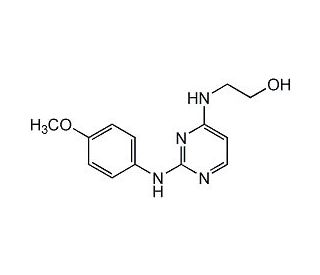

Cardiogenol C
QUICK LINKS
Cardiogenol C, a small molecule compound, has garnered considerable interest in scientific research for its potential role in promoting cardiac differentiation and regeneration. Its mechanism of action involves modulating various signaling pathways critical for cardiac development and function. Specifically, Cardiogenol C has been shown to activate the Wnt signaling pathway, which plays a pivotal role in regulating cell fate determination and tissue regeneration. By activating Wnt signaling, Cardiogenol C promotes the differentiation of pluripotent stem cells into cardiac progenitor cells, facilitating the formation of functional cardiac tissue. Research employing Cardiogenol C has provided insights into its potential applications in regenerative medicine and cardiac tissue engineering. Studies have utilized Cardiogenol C to enhance the efficiency of cardiac differentiation protocols in vitro, leading to the generation of cardiomyocytes for disease modeling and drug screening purposes. Furthermore, Cardiogenol C has been investigated in preclinical models of cardiac injury and disease to assess its potential efficacy in promoting cardiac regeneration and repair. Overall, Cardiogenol C stands as a promising tool in cardiovascular research, offering opportunities to explain the mechanisms underlying cardiac development and to develop novel strategies for regenerative targeting heart disease.
Cardiogenol C References
- Small molecules that induce cardiomyogenesis in embryonic stem cells. | Wu, X., et al. 2004. J Am Chem Soc. 126: 1590-1. PMID: 14871063
- Chemical induction of cardiac differentiation in p19 embryonal carcinoma stem cells. | Jasmin, ., et al. 2010. Stem Cells Dev. 19: 403-12. PMID: 20163207
- Cardiogenol C can induce Mouse Hair Bulge Progenitor Cells to Transdifferentiate into Cardiomyocyte-like Cells. | Yau, WW., et al. 2011. Proteome Sci. 9: 3. PMID: 21247432
- Peptidomimetic small-molecule compounds promoting cardiogenesis of stem cells. | Oh, SW., et al. 2012. Arch Pharm Res. 35: 1979-88. PMID: 23212640
- Identification and characterization of CW108F, a novel β-carboline compound that promotes cardiomyogenesis of stem cells. | Oh, SW., et al. 2013. Life Sci. 93: 409-15. PMID: 23892198
- One-step microfluidic generation of pre-hatching embryo-like core-shell microcapsules for miniaturized 3D culture of pluripotent stem cells. | Agarwal, P., et al. 2013. Lab Chip. 13: 4525-33. PMID: 24113543
- Small molecule cardiogenol C upregulates cardiac markers and induces cardiac functional properties in lineage-committed progenitor cells. | Mike, AK., et al. 2014. Cell Physiol Biochem. 33: 205-21. PMID: 24481283
- Ascorbic Acid-Induced Cardiac Differentiation of Murine Pluripotent Stem Cells: Transcriptional Profiling and Effect of a Small Molecule Synergist of Wnt/β-Catenin Signaling Pathway. | Ivanyuk, D., et al. 2015. Cell Physiol Biochem. 36: 810-30. PMID: 26021268
- Ascorbic acid promotes the direct conversion of mouse fibroblasts into beating cardiomyocytes. | Talkhabi, M., et al. 2015. Biochem Biophys Res Commun. 463: 699-705. PMID: 26047705
Ordering Information
| Product Name | Catalog # | UNIT | Price | Qty | FAVORITES | |
Cardiogenol C, 5 mg | sc-221396 | 5 mg | $272.00 |