

Butanoyl PAF
See product citations (1)
QUICK LINKS
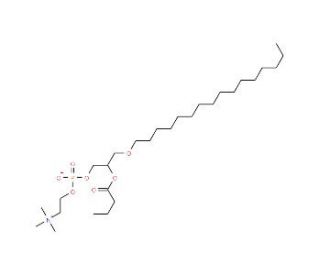
Butanoyl PAF, also known as 1-O-hexadecyl-2-O-butanoyl-sn-glycero-3-phosphocholine, is a synthetic derivative of Platelet-Activating Factor (PAF), a potent phospholipid mediator involved in various physiological and pathological processes. In research, Butanoyl PAF has been extensively utilized to investigate the structure-activity relationships and biological functions of PAF and its analogs. Its mechanism of action involves interaction with specific PAF receptors on the cell membrane, triggering intracellular signaling cascades. Studies have demonstrated that Butanoyl PAF can induce diverse cellular responses, including platelet aggregation, smooth muscle contraction, immune cell activation, and inflammation. Furthermore, researchers have utilized Butanoyl PAF to explain the molecular mechanisms underlying PAF-mediated pathophysiological processes, such as allergic reactions, cardiovascular diseases, and inflammatory disorders. Moreover, Butanoyl PAF has been employed as a valuable tool in experimental models to study the pharmacological effects of PAF analogs and develop novel strategies targeting PAF receptors. Overall, Butanoyl PAF serves as a crucial chemical tool in the exploration of PAF signaling pathways and the development of potential interventions for PAF-related diseases in research settings.
Butanoyl PAF References
- Inflammatory platelet-activating factor-like phospholipids in oxidized low density lipoproteins are fragmented alkyl phosphatidylcholines. | Marathe, GK., et al. 1999. J Biol Chem. 274: 28395-404. PMID: 10497200
- Oxidized alkyl phospholipids are specific, high affinity peroxisome proliferator-activated receptor gamma ligands and agonists. | Davies, SS., et al. 2001. J Biol Chem. 276: 16015-23. PMID: 11279149
- Synergism between platelet-activating factor-like phospholipids and peroxisome proliferator-activated receptor gamma agonists generated during low density lipoprotein oxidation that induces lipid body formation in leukocytes. | de Assis, EF., et al. 2003. J Immunol. 171: 2090-8. PMID: 12902515
- Oxidized phospholipids: from molecular properties to disease. | Fruhwirth, GO., et al. 2007. Biochim Biophys Acta. 1772: 718-36. PMID: 17570293
- Differential interaction of peptides derived from C-terminal domain of human apolipoprotein E with platelet activating factor analogs. | Nankar, SA., et al. 2013. Biochimie. 95: 1196-207. PMID: 23376877
- Lipid peroxidation generates biologically active phospholipids including oxidatively N-modified phospholipids. | Davies, SS. and Guo, L. 2014. Chem Phys Lipids. 181: 1-33. PMID: 24704586
- Mechanisms of cordycepin in the treatment of pulmonary arterial hypertension in rats based on metabonomics and transcriptomics. | Lin, J., et al. 2024. Sci Rep. 14: 12431. PMID: 38816406
- PPARgamma promotes monocyte/macrophage differentiation and uptake of oxidized LDL. | Tontonoz, P., et al. 1998. Cell. 93: 241-52. PMID: 9568716
Ordering Information
| Product Name | Catalog # | UNIT | Price | Qty | FAVORITES | |
Butanoyl PAF, 1 mg | sc-221386 | 1 mg | $46.00 | |||
Butanoyl PAF, 5 mg | sc-221386A | 5 mg | $205.00 |