
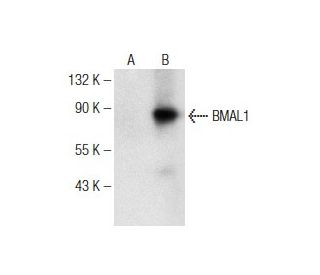


BMAL1 (h2): 293T Lysate: sc-115751
- human BMAL1 transfected 293T lysate
- 100 µg protein in 200 µl SDS-PAGE buffer; suitable as Western Blotting control for BMAL1 antibodies
- Suitable control antibody: BMAL1 Antibody (B-1): sc-365645 is recommended as control antibody for monitoring of BMAL1 expression knockdown by Western blotting or immunofluorescence
- should be stored at -20° C and repeated freezing and thawing should be minimized
- sample vial should be boiled once prior to use
- non-transfected control 293T lysate (sc-117752)

QUICK LINKS
BMAL1 (h2): 293T Lysate is derived from the 293T cell line, a human embryonic kidney cell line modified to express the SV40 large T antigen, enhancing its transfection efficiency and protein production capabilities. This lysate is enriched with human BMAL1, a core component of the circadian clock machinery that regulates various physiological processes by controlling the expression of clock genes. BMAL1, in heterodimeric partnership with CLOCK, activates the transcription of target genes through E-box elements, thereby driving rhythmic gene expression and maintaining circadian rhythms. In research, BMAL1 (h2): 293T Lysate is used to study the molecular mechanisms underlying circadian rhythms and their impact on cellular function. Researchers employ this lysate in Western blotting to detect and quantify BMAL1 expression levels under different experimental conditions, providing insights into its regulation and interactions with other clock proteins. The lysate is also utilized in co-immunoprecipitation assays to identify protein-protein interactions involving BMAL1, helping to explain its role in the circadian regulatory network. Additionally, functional assays using BMAL1 (h2): 293T Lysate are conducted to assess the transcriptional activity of BMAL1-CLOCK complexes on target gene promoters. These studies contribute to understanding how BMAL1 influences circadian rhythms and regulates downstream physiological processes such as metabolism, cell cycle, and hormone secretion. The use of BMAL1 (h2): 293T Lysate allows for detailed investigations into the molecular mechanisms of circadian regulation, offering valuable insights into the temporal control of gene expression.
Ordering Information
| Product Name | Catalog # | UNIT | Price | Qty | FAVORITES | |
BMAL1 (h2): 293T Lysate | sc-115751 | 100 µg/200 µl | $236.00 |