
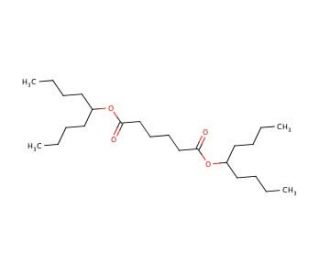

Bis(1-butylpentyl) adipate (CAS 77916-77-9)
LINK RAPIDI
Il bis(1-butilpentil) adipato è un composto chimico utilizzato in varie applicazioni industriali. È un liquido incolore e inodore, insolubile in acqua ma solubile in solventi organici. Il bis(1-butilpentil) adipato agisce come plastificante, ovvero può ammorbidire e aumentare la flessibilità della plastica e di altri materiali. L'adipato di bis(1-butilpentile) è utilizzato nella produzione di prodotti a base vinilica, come pavimenti, isolanti per fili e cavi e parti di automobili. Viene utilizzato nella produzione di adesivi, sigillanti e rivestimenti. È un componente della produzione di alcuni tipi di inchiostri e coloranti. Il bis(1-butilpentil) adipato svolge un ruolo importante nell'industria chimica, contribuendo alla produzione di un'ampia gamma di prodotti di uso quotidiano.
Bis(1-butylpentyl) adipate (CAS 77916-77-9) Referenze
- Determinazione della lisina in campioni farmaceutici contenenti ioni ammonio endogeni mediante un biosensore di lisina ossidasi basato su un elettrodo potenziometrico di ammonio allo stato solido. | Saurina, J., et al. 1999. Biosens Bioelectron. 14: 67-75. PMID: 10028651
- Legame covalente dell'ureasi su membrane potenziometriche selettive per l'ammonio. | Gil, MH., et al. 1992. Biosens Bioelectron. 7: 645-52. PMID: 1292521
- Il poli(etere chetone solfonato) come materiale caricato alternativo al poli(cloruro di vinile) nella progettazione di elettrodi ionoselettivi. | González-Bellavista, A., et al. 2006. Anal Chim Acta. 577: 85-90. PMID: 17723657
- Caratterizzazione di membrane optodiche selettive per il sodio basate su ionofori neutri e dosaggio del sodio nel plasma. | Seiler, K., et al. 1991. Clin Chem. 37: 1350-5. PMID: 1868594
- Procedure di analisi dei dati dirette e a due stadi basate su PCA, PLS-DA e ANN per la lingua elettronica basata su ISE: effetto dell'estrazione supervisionata delle caratteristiche. | Ciosek, P., et al. 2005. Talanta. 67: 590-6. PMID: 18970211
- Prestazioni comparative di derivati del 14-crown-4 come elettrodi selettivi al litio. | Kataky, R., et al. 1991. Analyst. 116: 135-40. PMID: 1905884
- Una lingua elettronica per la rilevazione semiquantitativa delle gliadine negli alimenti. | Peres, AM., et al. 2011. Talanta. 83: 857-64. PMID: 21147329
- Procedura pratica per discriminare il miele monoflora con un'ampia variabilità del profilo pollinico utilizzando una lingua elettronica. | Sousa, ME., et al. 2014. Talanta. 128: 284-92. PMID: 25059162
- Valutazione dell'intensità sensoriale degli oli di oliva mediante l'uso di una lingua elettronica. | Veloso, AC., et al. 2016. Talanta. 146: 585-93. PMID: 26695307
- Percezione dei difetti sensoriali degli oli di oliva mediante un dispositivo di assaggio potenziometrico. | Veloso, ACA., et al. 2018. Talanta. 176: 610-618. PMID: 28917798
- Miglioramento della durata e della sensibilità della membrana sensibile all'amaro per i farmaci. | Wu, X., et al. 2017. Sensors (Basel). 17: PMID: 29113047
- Sensore del gusto: Lingua elettronica con membrane lipidiche. | Wu, X., et al. 2020. Anal Sci. 36: 147-159. PMID: 31787669
- Discriminazione semi-quantitativa di miele adulterato con soluzione di zucchero di canna da parte di un ETongue. | Dias, LG., et al. 2022. Chem Biodivers. 19: e202200698. PMID: 36125776
- Potenziometria del Na+ nel siero e nell'urina non diluiti con l'uso di un elettrodo a membrana polimerica con solvente a base di carrier neutro migliorato. | Anker, P., et al. 1983. Clin Chem. 29: 1508-12. PMID: 6872210
Informazioni ordini
| Nome del prodotto | Codice del prodotto | UNITÀ | Prezzo | Quantità | Preferiti | |
Bis(1-butylpentyl) adipate, 5 ml | sc-252438 | 5 ml | $146.00 |