
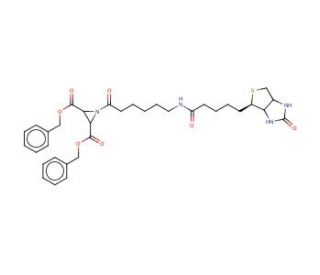

bADA
QUICK LINKS
bADA, a chemical compound of significant interest in scientific research, has drawn attention for its versatile applications and intriguing properties. One notable aspect of its mechanism of action lies in its role as an enzyme cofactor. bADA serves as a crucial cofactor for various enzymatic reactions, particularly those involved in purine metabolism and DNA synthesis. bADA has been extensively studied for its enzymatic activity and its impact on cellular processes. Researchers have investigated its role in maintaining cellular homeostasis and regulating key biochemical pathways. Insights gained from these studies have deepened our understanding of fundamental cellular processes and metabolic regulation. Furthermore, bADA′s enzymatic properties have sparked interest in its potential applications beyond basic research. Researchers have explored its use in biotechnology and biocatalysis, leveraging its catalytic activity for various industrial processes. Additionally, bADA′s role as a cofactor in purine metabolism has led to its investigation in metabolic engineering and synthetic biology, where it holds promise for applications such as the production of novel bioactive compounds and pharmaceutical intermediates. Overall, bADA′s diverse enzymatic activities and role in cellular metabolism make it a valuable asset in scientific research, offering insights into fundamental biochemical processes and potential applications in various fields of inquiry.
bADA References
- Synthesis and antiplasmodial activity of a cysteine protease-inhibiting biotinylated aziridine-2,3-dicarboxylate. | Gelhaus, C., et al. 2004. Biol Chem. 385: 435-8. PMID: 15196005
- Blocking effect of a biotinylated protease inhibitor on the egress of Plasmodium falciparum merozoites from infected red blood cells. | Gelhaus, C., et al. 2005. Biol Chem. 386: 499-502. PMID: 15927894
- Use of Bartonella adhesin A (BadA) immunoblotting in the serodiagnosis of Bartonella henselae infections. | Wagner, CL., et al. 2008. Int J Med Microbiol. 298: 579-90. PMID: 18501673
- Benzoate-coenzyme A ligase, encoded by badA, is one of three ligases able to catalyze benzoyl-coenzyme A formation during anaerobic growth of Rhodopseudomonas palustris on benzoate. | Egland, PG., et al. 1995. J Bacteriol. 177: 6545-51. PMID: 7592432
Ordering Information
| Product Name | Catalog # | UNIT | Price | Qty | FAVORITES | |
bADA, 2 mg | sc-202967 | 2 mg | $739.00 |