
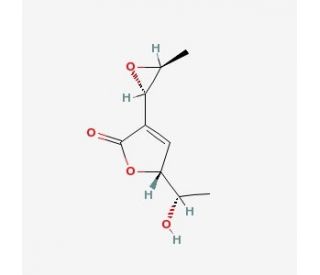

Asperlactone (CAS 76375-62-7)
QUICK LINKS
Asperlactone is a compound that functions as a potent inhibitor of certain enzymes involved in cellular processes. It exerts its mechanism of action by binding to the active site of the target enzyme, thereby disrupting its normal function. This interference ultimately leads to the inhibition of specific biochemical pathways within the cell. Asperlactone′s mechanism of action involves the disruption of key molecular interactions, resulting in the modulation of cellular signaling and metabolic pathways. Asperlactone plays a role in the regulation of cellular processes by targeting and inhibiting the activity of the enzyme, thereby influencing the biochemical activity within the cell. Its mechanism of action involves the specific binding to the target enzyme, leading to the disruption of its catalytic function and subsequent impact on cellular processes.
Asperlactone (CAS 76375-62-7) References
- Characterization and regulation of new secondary metabolites from Aspergillus ochraceus M18 obtained by UV mutagenesis. | Awad, G., et al. 2005. Can J Microbiol. 51: 59-67. PMID: 15782235
- Chlorohydroaspyrones A and B, antibacterial aspyrone derivatives from the marine-derived fungus Exophiala sp. | Zhang, D., et al. 2008. J Nat Prod. 71: 1458-60. PMID: 18661951
- Cloning and characterization of novel methylsalicylic acid synthase gene involved in the biosynthesis of isoasperlactone and asperlactone in Aspergillus westerdijkiae. | Bacha, N., et al. 2009. Fungal Genet Biol. 46: 742-9. PMID: 19589392
- Nine new and five known polyketides derived from a deep sea-sourced Aspergillus sp. 16-02-1. | Chen, XW., et al. 2014. Mar Drugs. 12: 3116-37. PMID: 24871461
- Chemical Composition of Aspergillus creber Extract and Evaluation of its Antimicrobial and Antioxidant Activities. | Sakhri, A., et al. 2019. Pol J Microbiol. 68: 309-316. PMID: 31880876
- Secondary Metabolites and Bioactivities of Aspergillus ochraceopetaliformis Isolated from Anthurium brownii. | Hu, HC., et al. 2020. ACS Omega. 5: 20991-20999. PMID: 32875235
- A new lactone from mangrove endophytic fungus Aspergillus sp. GXNU-A9. | Zhang, W., et al. 2023. Nat Prod Res. 37: 417-423. PMID: 34937443
- Genome and Metabolome MS-Based Mining of a Marine Strain of Aspergillus affinis. | Gonçalves, MFM., et al. 2021. J Fungi (Basel). 7: PMID: 34947073
- Whole genome sequencing of Penicillium and Burkholderia strains antagonistic to the causal agent of kauri dieback disease (Phytophthora agathidicida) reveals biosynthetic gene clusters related to antimicrobial secondary metabolites. | Byers, AK., et al. 2023. Mol Ecol Resour.. PMID: 37208988
Ordering Information
| Product Name | Catalog # | UNIT | Price | Qty | FAVORITES | |
Asperlactone, 1 mg | sc-202962 | 1 mg | $205.00 | |||
Asperlactone, 5 mg | sc-202962A | 5 mg | $367.00 |