
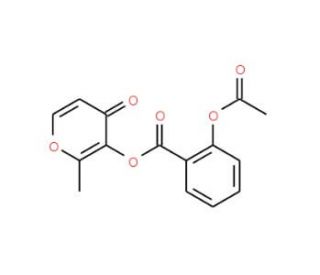

Aspalatone (CAS 147249-33-0)
QUICK LINKS
Aspalatone, with the CAS number 147249-33-0, is a synthetic chemical compound derived from salicylic acid, known for its unique molecular structure that combines salicylate with a methoxy group. This compound has been extensively studied in various non-medical research domains, particularly in the field of organic chemistry and as a model compound in analytical studies. Aspalatone′s molecular design facilitates its role in studies focused on the understanding of molecular interactions and the stability of salicylate derivatives under various conditions. In research settings, aspalatone has been employed to explore the kinetics and mechanisms of ester hydrolysis, given its ester linkage that is susceptible to both acidic and basic hydrolysis. Additionally, its antioxidant properties linked to the presence of the methoxy group have been utilized in studies related to oxidative stress in non-biological systems, such as in the preservation of food products and the stabilization of industrial materials against oxidative degradation. The chemical has also been used as a reference compound in the development of new synthetic methodologies for creating salicylate-based compounds, which are significant in various industrial applications including the synthesis of performance chemicals and additives that enhance product stability and longevity.
Aspalatone (CAS 147249-33-0) References
- Effect of vehicles and enhancers on the in vitro skin penetration of aspalatone and its enzymatic degradation across rat skins. | Gwak, HS. and Chun, IK. 2001. Arch Pharm Res. 24: 572-7. PMID: 11794538
- Role of oxidative stress in epileptic seizures. | Shin, EJ., et al. 2011. Neurochem Int. 59: 122-37. PMID: 21672578
- Aspalatone Prevents VEGF-Induced Lipid Peroxidation, Migration, Tube Formation, and Dysfunction of Human Aortic Endothelial Cells. | Sonowal, H., et al. 2017. Oxid Med Cell Longev. 2017: 2769347. PMID: 28243353
- Lipid Peroxidation Products in Human Health and Disease 2016. | Ramana, KV., et al. 2017. Oxid Med Cell Longev. 2017: 2163285. PMID: 28337246
- Synthesis and antiplatelet effects of the new antithrombotic agent aspalatone with low ulcerogenicity. | Han, BH., et al. 1994. Arzneimittelforschung. 44: 1122-6. PMID: 7818584
- Metabolic fate of the new antithrombotic agent aspalatone in rats. In vivo and in vitro study. | Suh, DY., et al. 1995. Arzneimittelforschung. 45: 1071-4. PMID: 8595061
- A new antithrombotic agent, aspalatone, attenuated cardiotoxicity induced by doxorubicin in the mouse; possible involvement of antioxidant mechanism. | Kim, C., et al. 1997. Life Sci. 60: PL75-82. PMID: 9010492
- Salicylate levels in rat stomach tissues after administration of aspalatone and acetylsalicylic acid in relation to their ulcerogenicity. | Suh, DY., et al. 1997. Arzneimittelforschung. 47: 826-8. PMID: 9272238
- Aspalatone, a new antiplatelet agent, attenuates the neurotoxicity induced by kainic acid in the rat. | Kim, HC., et al. 1997. Life Sci. 61: PL 373-81. PMID: 9399638
Ordering Information
| Product Name | Catalog # | UNIT | Price | Qty | FAVORITES | |
Aspalatone, 5 mg | sc-291913 | 5 mg | $36.00 | |||
Aspalatone, 10 mg | sc-291913A | 10 mg | $68.00 |