
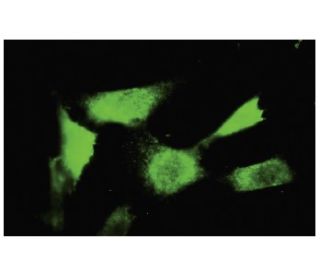


ASAHL Antibody (A19): sc-100470
- ASAHL Antibody (A19) is a mouse monoclonal IgG2a κ ASAHL antibody, cited in 14 publications, provided at 100 µg/ml
- raised against recombinant ASAHL of human origin
- recommended for detection of ASAHL of mouse, rat and human origin by WB, IP, IF and ELISA
- At present, we have not yet completed the identification of the preferred secondary detection reagent(s) for ASAHL Antibody (A19). This work is in progress.

ASAHL Antibody (A19) is a mouse monoclonal IgG2a kappa light chain antibody that detects ASAHL protein of mouse, rat, and human origin by western blotting (WB), immunoprecipitation (IP), immunofluorescence (IF), and enzyme-linked immunosorbent assay (ELISA). Anti-ASAHL antibody (A19) is available as the non-conjugated form. ASAHL, or N-acylsphingosine amidohydrolase (acid ceramidase)-like, is a crucial enzyme belonging to the choloylglycine hydrolase family, predominantly expressed in the kidney and liver. ASAHL plays a vital role in the hydrolysis of bioactive N-acylethanolamines (NAEs) into ethanolamine and free fatty acids, which are important for various physiological processes, including inflammation and pain modulation. ASAHL operates optimally at a pH of 4.5-5, distinguishing ASAHL from other NAE-hydrolyzing enzymes like fatty acid amide hydrolase (FAAH). Upon activation, ASAHL shows a preference for substrates such as N-palmitoylethanolamine and anandamide, highlighting ASAHL′s specificity in metabolic pathways. ASAHL′s activity is enhanced by post-translational modifications, including four glycosylation sites essential for stability and function, as well as activation by agents like dithiothreitol and Triton X-100. Such intricate regulation underscores ASAHL′s importance in maintaining cellular homeostasis and potential implications in therapeutic targets for various diseases.
Alexa Fluor® is a trademark of Molecular Probes Inc., OR., USA
LI-COR® and Odyssey® are registered trademarks of LI-COR Biosciences
ASAHL Antibody (A19) References:
- Molecular cloning and characterization of a human cDNA and gene encoding a novel acid ceramidase-like protein. | Hong, SB., et al. 1999. Genomics. 62: 232-41. PMID: 10610717
- Molecular characterization of N-acylethanolamine-hydrolyzing acid amidase, a novel member of the choloylglycine hydrolase family with structural and functional similarity to acid ceramidase. | Tsuboi, K., et al. 2005. J Biol Chem. 280: 11082-92. PMID: 15655246
- Involvement of N-acylethanolamine-hydrolyzing acid amidase in the degradation of anandamide and other N-acylethanolamines in macrophages. | Sun, YX., et al. 2005. Biochim Biophys Acta. 1736: 211-20. PMID: 16154384
- Molecular biology of the enzymes that degrade endocannabinoids. | Puffenbarger, RA. 2005. Curr Drug Targets CNS Neurol Disord. 4: 625-31. PMID: 16375680
- Pharmacological characterization of hydrolysis-resistant analogs of oleoylethanolamide with potent anorexiant properties. | Astarita, G., et al. 2006. J Pharmacol Exp Ther. 318: 563-70. PMID: 16702440
- Predominant expression of lysosomal N-acylethanolamine-hydrolyzing acid amidase in macrophages revealed by immunochemical studies. | Tsuboi, K., et al. 2007. Biochim Biophys Acta. 1771: 623-32. PMID: 17462942
- The N-acylethanolamine-hydrolyzing acid amidase (NAAA). | Tsuboi, K., et al. 2007. Chem Biodivers. 4: 1914-25. PMID: 17712833
- Proteolytic activation and glycosylation of N-acylethanolamine-hydrolyzing acid amidase, a lysosomal enzyme involved in the endocannabinoid metabolism. | Zhao, LY., et al. 2007. Biochim Biophys Acta. 1771: 1397-405. PMID: 17980170
Ordering Information
| Product Name | Catalog # | UNIT | Price | Qty | FAVORITES | |
ASAHL Antibody (A19) | sc-100470 | 100 µg/ml | $322.00 |