
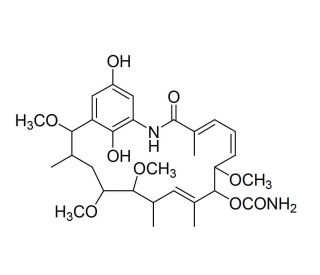

Antibiotic TAN 420E (CAS 91700-93-5)
QUICK LINKS
Antibiotic TAN 420E, a complex polyketide discovered in the actinomycete Streptomyces sp., is utilized in microbiological research to study its potent inhibitory effects on bacterial protein synthesis. This antibiotic functions by binding to the 50S ribosomal subunit, thereby inhibiting the peptidyl transferase activity which is crucial for peptide bond formation during protein translation. This specific interaction makes TAN 420E an important tool for dissecting the mechanism of ribosomal inhibition and understanding how bacterial cells respond to such stress at a molecular level. Research involving TAN 420E extends beyond its antibacterial properties to explore its potential as a probe in studying the regulation of ribosome biogenesis and function. By examining the responses of bacteria to ribosomal stress induced by TAN 420E, scientists can uncover the broader implications of ribosomal inhibitors on cell viability, adaptation, and resistance development. These studies are critical for advancing our knowledge of microbial physiology and can lead to new insights into the design of novel antibacterial strategies that target the ribosomal machinery, strictly within research environments.
Antibiotic TAN 420E (CAS 91700-93-5) References
- Clethramycin, a new inhibitor of pollen tube growth with antifungal activity from Streptomyces hygroscopicus TP-A0623. I. Screening, taxonomy, fermentation, isolation and biological properties. | Furumai, T., et al. 2003. J Antibiot (Tokyo). 56: 700-4. PMID: 14563159
- Antioxidant properties of dihydroherbimycin A from a newly isolated Streptomyces sp. | Chang, HB. and Kim, JH. 2007. Biotechnol Lett. 29: 599-603. PMID: 17206369
- Herbimycins D-F, ansamycin analogues from Streptomyces sp. RM-7-15. | Shaaban, KA., et al. 2013. J Nat Prod. 76: 1619-26. PMID: 23947794
- Evaluation of in vitro free radical scavenging potential of Streptomyces sp. AM-S1 culture filtrate. | Sowndhararajan, K. and Kang, SC. 2013. Saudi J Biol Sci. 20: 227-33. PMID: 23961239
- Potential of rare actinomycetes in the production of metabolites against multiple oxidant agents. | Mohammadipanah, F. and Momenilandi, M. 2018. Pharm Biol. 56: 51-59. PMID: 29275696
- HSQC-TOCSY Fingerprinting-Directed Discovery of Antiplasmodial Polyketides from the Marine Ascidian-Derived Streptomyces sp. (Usc-16018). | Buedenbender, L., et al. 2018. Mar Drugs. 16: PMID: 29849004
- Awakening ancient polar Actinobacteria: diversity, evolution and specialized metabolite potential. | Millán-Aguiñaga, N., et al. 2019. Microbiology (Reading). 165: 1169-1180. PMID: 31592756
- Diversity and Bioactive Potential of Actinobacteria from Unexplored Regions of Western Ghats, India. | Siddharth, S., et al. 2020. Microorganisms. 8: PMID: 32046111
- Identification of Streptomyces scopuliridis KR-001 and its herbicidal characteristics | Boyoung Lee; Jae Deok Kim; Young Sook Kim; Young Kwan Ko; Gyu Hwan Yon; Chang-Jin Kim; Suk Jin Koo, et al. 2013. Weed & Turfgrass Science. 2(1): 38-46.
Ordering Information
| Product Name | Catalog # | UNIT | Price | Qty | FAVORITES | |
Antibiotic TAN 420E, 500 µg | sc-202058 | 500 µg | $250.00 |