
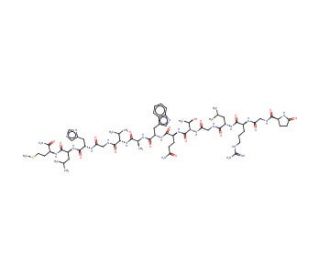

Alytesin (CAS 31078-12-3)
QUICK LINKS
Alytesin, a peptide isolated from the skin of the midwife toad (Alytes obstetricans), has garnered significant interest in scientific research, particularly in the field of neuroscience and peptide pharmacology. This compound acts as an agonist for bombesin-like receptors (BLRs), specifically targeting the gastrin-releasing peptide receptor (GRPR) subtype. Upon binding to GRPR, alytesin triggers a cascade of intracellular signaling events, including activation of phospholipase C (PLC), protein kinase C (PKC), and inositol trisphosphate (IP3) production. These signaling pathways ultimately lead to the modulation of neurotransmitter release, neuronal excitability, and synaptic plasticity. Research utilizing alytesin has provided valuable insights into the physiological roles of GRPR activation in various regions of the central nervous system, including the modulation of pain perception, stress responses, and feeding behavior. Additionally, alytesin and its analogs have been employed as pharmacological tools for investigating the functional significance of GRPR signaling in animal models of neurological disorders, such as anxiety, depression, and addiction. Its specificity for GRPR and its ability to modulate neuronal activity make alytesin a valuable asset for unraveling the complexities of neuropeptide signaling and its implications in brain function and behavior.
Alytesin (CAS 31078-12-3) References
- Antimicrobial peptides and alytesin are co-secreted from the venom of the Midwife toad, Alytes maurus (Alytidae, Anura): implications for the evolution of frog skin defensive secretions. | König, E., et al. 2012. Toxicon. 60: 967-81. PMID: 22800568
- Biogenic amines and active peptides in extracts of the skin of thirty-two European amphibian species. | Roseghini, M., et al. 1989. Comp Biochem Physiol C Comp Pharmacol Toxicol. 94: 455-60. PMID: 2576781
- Central neuromodulation of gastric acid secretion by bombesin-like peptides. | Guglietta, A., et al. 1985. Peptides. 6 Suppl 3: 75-81. PMID: 3841693
- Alytesin and bombesin, two peptide analogs from amphibian skin. | Anastasi, A. 1971. Naunyn Schmiedebergs Arch Pharmakol. 269: 135-9. PMID: 4254272
- The action of bombesin on the systemic arterial blood pressure of some experimental animals. | Erspamer, V., et al. 1972. Br J Pharmacol. 45: 442-50. PMID: 4342029
- Isolation and amino acid sequences of alytesin and bombesin, two analogous active tetradecapeptides from the skin of European discoglossid frogs. | Anastasi, A., et al. 1972. Arch Biochem Biophys. 148: 443-6. PMID: 4537042
- Occurrence of bombesin and alytesin in extracts of the skin of three European discoglossid frogs and pharmacological actions of bombesin on extravascular smooth muscle. | Erspamer, V., et al. 1972. Br J Pharmacol. 45: 333-48. PMID: 5048651
- Isolation and structure of bombesin and alytesin, 2 analogous active peptides from the skin of the European amphibians Bombina and Alytes. | Anastasi, A., et al. 1971. Experientia. 27: 166-7. PMID: 5544731
- Bombesin, bombesin analogues, and related peptides: effects on thermoregulation. | Rivier, JE. and Brown, MR. 1978. Biochemistry. 17: 1766-71. PMID: 656396
- Characterization of an avian gastric (proventricular) peptide having sequence homology with the porcine gastrin-releasing peptide and the amphibian peptides bombesin and alytesin. | McDonald, TJ., et al. 1980. FEBS Lett. 122: 45-8. PMID: 7215543
Ordering Information
| Product Name | Catalog # | UNIT | Price | Qty | FAVORITES | |
Alytesin, 1 mg | sc-391186 | 1 mg | $195.00 |