
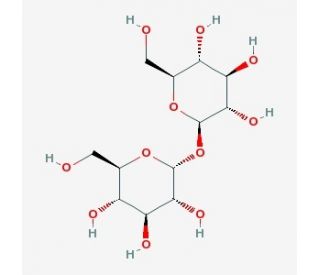

α,β-Trehalose (CAS 585-91-1)
QUICK LINKS
α,β-Trehalose is a non-reducing disaccharide composed of two glucose units joined by an α,β-1,1-glycosidic bond. This unique chemical structure makes trehalose extremely stable and resistant to acid hydrolysis, and it does not readily participate in Maillard reactions, which are typical browning reactions that occur during food processing. In research, trehalose is frequently utilized for its remarkable ability to protect proteins and cellular membranes from damage caused by dehydration and freezing. This protective role is attributed to trehalose′s ability to replace water molecules around macromolecules, thus stabilizing their structures in extreme conditions. Additionally, trehalose is known to stabilize proteins by forming a glass-like matrix in their vicinity when dehydrated, which prevents protein aggregation, a common issue in protein-based formulations. In the field of biotechnology and biochemistry, trehalose is used extensively in the cryopreservation of cells and as a stabilizing agent in the freeze-drying of pharmaceuticals, although the latter uses extend beyond therapeutic purposes. Researchers also explore trehalose′s role in stress response in various organisms, studying how it protects cells against environmental stresses such as desiccation, cold, heat, and osmotic stress, thereby providing insights into cellular defense mechanisms and stress tolerance.
α,β-Trehalose (CAS 585-91-1) References
- The natural product brartemicin is a high affinity ligand for the carbohydrate-recognition domain of the macrophage receptor mincle. | Jacobsen, KM., et al. 2015. Medchemcomm. 6: 647-652. PMID: 25893085
- daf-16/FoxO promotes gluconeogenesis and trehalose synthesis during starvation to support survival. | Hibshman, JD., et al. 2017. Elife. 6: PMID: 29063832
- First report of the production of a potent biosurfactant with α,β-trehalose by Fusarium fujikuroi under optimized conditions of submerged fermentation. | Reis, CBLD., et al. 2018. Braz J Microbiol. 49 Suppl 1: 185-192. PMID: 29728339
- Studies on qualitative and quantitative detection of trehalose purity by terahertz spectroscopy. | Huang, L., et al. 2020. Food Sci Nutr. 8: 1828-1836. PMID: 32328248
- Anomeric Selectivity of Trehalose Transferase with Rare l-Sugars. | Mestrom, L., et al. 2020. ACS Catal. 10: 8835-8839. PMID: 32953231
- NMR Profiling of North Macedonian and Bulgarian Honeys for Detection of Botanical and Geographical Origin. | Gerginova, D., et al. 2020. Molecules. 25: PMID: 33066379
- Production of Biosurfactants by Ascomycetes. | Sanches, MA., et al. 2021. Int J Microbiol. 2021: 6669263. PMID: 33936207
- Optical Rotation-A Reliable Parameter for Authentication of Honey? | Gerginova, D., et al. 2022. Molecules. 27: PMID: 36558078
- Biodegradation of Selected Hydrocarbons by Fusarium Species Isolated from Contaminated Soil Samples in Riyadh, Saudi Arabia. | Al-Otibi, F., et al. 2023. J Fungi (Basel). 9: PMID: 36836330
- Dietary Trehalose as a Bioactive Nutrient. | Chen, A. and Gibney, PA. 2023. Nutrients. 15: PMID: 36986123
Ordering Information
| Product Name | Catalog # | UNIT | Price | Qty | FAVORITES | |
α,β-Trehalose, 10 mg | sc-221192 | 10 mg | $129.00 | |||
α,β-Trehalose, 50 mg | sc-221192A | 50 mg | $421.00 |