
alpha 1 Sodium Potassium ATPase/ATP1A1慢病毒激活颗粒(m): sc-419236-LAC
- 针对种属:mouse
- 200 µl 高滴度即用型CRISPR/dCas9慢病毒激活粒子
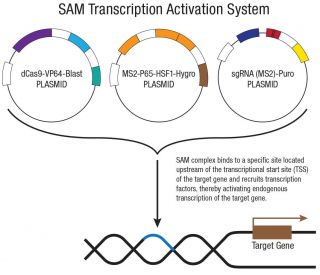
- alpha 1 Sodium Potassium ATPase/ATP1A1 慢病毒激活颗粒(m)是一种协同激活介质(SAM)转录激活系统,通过细胞慢病毒转导,特异高效地上调目的基因的表达
- alpha 1 Sodium Potassium ATPase/ATP1A1慢病毒激活颗粒(m)包含以下SAM激活元素:一种是去活化的Cas9 (dCas9)核酸酶(D10A and N863A),它融合了转录活化域VP64;一种是MS2-p65-HSF1融合蛋白;一种是目标特定的20 nt向导RNA。它们还含有杀稻瘟菌素,潮霉素和嘌呤霉素抗性基因
- 一经转导,形成的SAM复合物结合到转录起始位点上游大约200-250 nt的特定位点区域,为高效激活基因,招募转录因子
- 由 alpha 1 Sodium Potassium ATPase/ATP1A1 慢病毒激活质粒 (m) 和 alpha 1 Sodium Potassium ATPase/ATP1A1 慢病毒激活质粒 (m2) 编码的 gRNA 靶向 Atp1a1 启动子的不同调控区域。其中一种或两种设计可能可用
- 转染后,基因激活效率可以用抗体:alpha 1 Sodium Potassium ATPase/ATP1A1 Antibody (C464.6): sc-21712,通过WB、IF或IHC分析

订购信息
| 产品名称 | 产品编号 | 规格 | 价格 | 数量 | 收藏夹 | |
alpha 1 Sodium Potassium ATPase/ATP1A1慢病毒激活颗粒(m) | sc-419236-LAC | 200 µl | $455.00 |
小鼠 Atp1a1 编码 Na⁺/K⁺-ATPase 的 α1 催化亚基。Na⁺/K⁺-ATPase 属于 P 型 ATP 酶,通过水解 ATP 维持跨膜 Na⁺ 与 K⁺ 梯度,这对静息膜电位、渗透平衡以及继发性主动转运至关重要。除离子稳态外,ATP1A1 还参与与膜微区相关的信号过程,包括与 Src 家族激酶的串扰及其下游 MAPK/ERK 相关通路,从而影响细胞增殖与应激反应。对 Na⁺/K⁺-ATPase 功能的扰动被广泛用于研究兴奋性、上皮转运与代谢偶联,并为解析与疾病相关的表型提供机制切入点,例如心代谢功能障碍、神经兴奋性疾病以及肾小管转运缺陷等。在小鼠研究体系中,Atp1a1 也常被用作反映质膜完整性的可靠标志,并在通路研究中作为决定对强心苷敏感性的关键因素。
alpha 1 Sodium Potassium ATPase/ATP1A1 慢病毒激活颗粒(m)通过将完整的协同激活介导体(SAM)转录激活系统包装到可直接转导的高滴度慢病毒颗粒中,满足了这一需求,从而能够在更广泛的人类细胞类型中高效上调 Atp1a1 表达。
alpha 1 Sodium Potassium ATPase/ATP1A1 慢病毒激活颗粒(m)通过慢病毒转导递送协同激活介导体(SAM)系统的所有功能组分。该系统包含三种共同转导至靶细胞的颗粒制剂:一种编码与VP64转激活域融合的无催化活性的dCas9(D10A和N863A突变),并携带布拉西定抗性基因; 一种编码MS2-p65-HSF1融合蛋白并携带潮霉素抗性基因的制剂;以及一种编码靶标特异性20 nt sgRNA(与两个MS2 RNA适配体融合)并携带嘌呤霉素抗性基因的制剂。经过慢病毒转导和表达盒的基因组整合后,SAM组分得以稳定表达,并在Atp1a1转录起始位点上游的近端启动子区域内的靶位点组装。在此处,VP64、p65和HSF1协同作用,招募内源性转录 machinery,从而驱动内源性alpha 1 Sodium Potassium ATPase/ATP1A1表达的持续上调。使用无核酸酶活性的 dCas9 可避免引入双链 DNA 断裂,并保留原生的 Atp1a1 基因组位点和调控架构。
慢病毒载体具有多项实用优势:稳定的基因组整合支持细胞分裂过程中的可遗传激活;高滴度颗粒制剂免去了内部病毒生产的需要;且与原代细胞、非增殖细胞及转染抗性细胞类型的兼容性,扩大了实验的可及性。可通过嘌呤霉素、潮霉素和布拉西定进行三重抗生素筛选,以确认并富集成功的转导。
仅供研究使用。不用于诊断或治疗。