
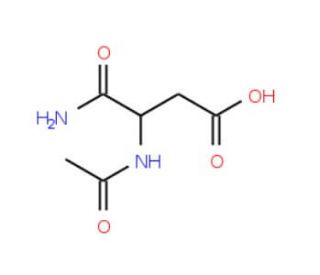

Acetyl-L-aspartic alpha-amide (CAS 60803-67-0)
QUICK LINKS
Acetyl-L-aspartic alpha-amide holds significant importance in the realm of biochemical and physiological research. Derived from glutamic acid, a non-essential amino acid naturally present in the human body, this compound serves as a reagent in various laboratory experiments. Its applications span a wide range of scientific endeavors, including neurotransmitter synthesis, enzyme inhibition, and metabolic regulation. One of the notable applications of Acetyl-L-aspartic alpha-amide lies in its involvement in the synthesis of gamma-aminobutyric acid (GABA), a vital neurotransmitter in the brain. By inhibiting the enzyme glutamate decarboxylase, which plays a role in GABA synthesis, Acetyl-L-aspartic alpha-amide contributes to the regulation of GABA levels. Furthermore, Acetyl-L-aspartic alpha-amide is believed to act as an inhibitor of the glutamate decarboxylase enzyme. This inhibition leads to a decrease in GABA synthesis. Additionally, it binds to the GABA receptor responsible for modulating neuronal activity in the brain. This binding process effectively hinders the action of the GABA receptor, resulting in an elevation of neuronal activity.
Ordering Information
| Product Name | Catalog # | UNIT | Price | Qty | FAVORITES | |
Acetyl-L-aspartic alpha-amide, 50 mg | sc-284916 | 50 mg | $364.00 | |||
Acetyl-L-aspartic alpha-amide, 250 mg | sc-284916A | 250 mg | $780.00 |