
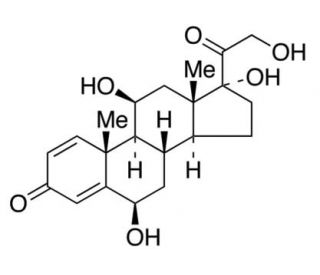

6β-Hydroxy prednisolone (CAS 16355-29-6)
QUICK LINKS
Eukaryotic initiation factors (eIFs) are a crucial group of proteins involved in the initiation phase of protein translation in eukaryotic cells. This process, known as translation initiation, marks the beginning of protein synthesis, and it plays a central role in regulating gene expression. eIFs orchestrate the assembly of ribosomes on messenger RNA (mRNA) and the recruitment of transfer RNA (tRNA) molecules bearing amino acids, enabling the synthesis of polypeptide chains. This intricate process is highly regulated and essential for proper cellular function. One of the key events in translation initiation is the formation of the eIF complex known as the eIF4F complex, which consists of eIF4E, eIF4A, and eIF4G. eIF4E binds to the mRNA cap structure, eIF4A serves as an RNA helicase, and eIF4G acts as a scaffold protein facilitating the interaction between various translation factors. This complex plays a pivotal role in mRNA recruitment to ribosomes, allowing efficient translation to occur. Additionally, eIF2 is another critical factor in translation initiation, responsible for delivering the initiator tRNA to the ribosome′s P-site. (eukaryotic translation initiation factor) eIF inhibitors are a class of chemical compounds that target key components of the eIF signaling pathway, disrupting their normal functions and consequently impeding the initiation of protein translation. These inhibitors may act at various stages of translation initiation, including the inhibition of eIF4F complex formation, disruption of eIF2 function, or interference with RNA helicase activity. By interfering with these critical steps, eIF inhibitors can modulate the rate of protein synthesis, potentially leading to global changes in gene expression.
6β-Hydroxy prednisolone (CAS 16355-29-6) References
- Pharmacokinetic considerations in the treatment of inflammatory bowel disease. | Schwab, M. and Klotz, U. 2001. Clin Pharmacokinet. 40: 723-51. PMID: 11707060
- Glucocorticoid pharmacokinetics and growth retardation in children with renal transplants. | Chavatte, C., et al. 2004. Pediatr Nephrol. 19: 898-904. PMID: 15197639
- Detection and characterization of betamethasone metabolites in human urine by LC-MS/MS. | Matabosch, X., et al. 2015. Drug Test Anal. 7: 663-72. PMID: 25545348
- Impact of ketoconazole on the metabolism of prednisolone. | Zürcher, RM., et al. 1989. Clin Pharmacol Ther. 45: 366-72. PMID: 2639662
- Quantitative Assessment of Population Variability in Hepatic Drug Metabolism Using a Perfused Three-Dimensional Human Liver Microphysiological System. | Tsamandouras, N., et al. 2017. J Pharmacol Exp Ther. 360: 95-105. PMID: 27760784
- Pharmacokinetic Drug-Drug Interactions Between Immunosuppressant and Anti-Infective Agents: Antimetabolites and Corticosteroids. | Van Matre, ET., et al. 2018. Ann Transplant. 23: 66-74. PMID: 29358572
- An Active Learning Activity to Reinforce the Design Components of the Corticosteroids. | Slauson, SR. and Mandela, P. 2018. Pharmacy (Basel). 6: PMID: 29401733
- Clinical Pharmacokinetic and Pharmacodynamic Considerations in the Treatment of Inflammatory Bowel Disease. | Derijks, LJJ., et al. 2018. Clin Pharmacokinet. 57: 1075-1106. PMID: 29512050
- In vitro assessments predict that CYP3A4 contributes to a greater extent than CYP3A5 to prednisolone clearance. | Skauby, RH., et al. 2021. Basic Clin Pharmacol Toxicol. 129: 427-436. PMID: 34396687
Ordering Information
| Product Name | Catalog # | UNIT | Price | Qty | FAVORITES | |
6β-Hydroxy prednisolone, 1 mg | sc-471506 | 1 mg | $360.00 |